
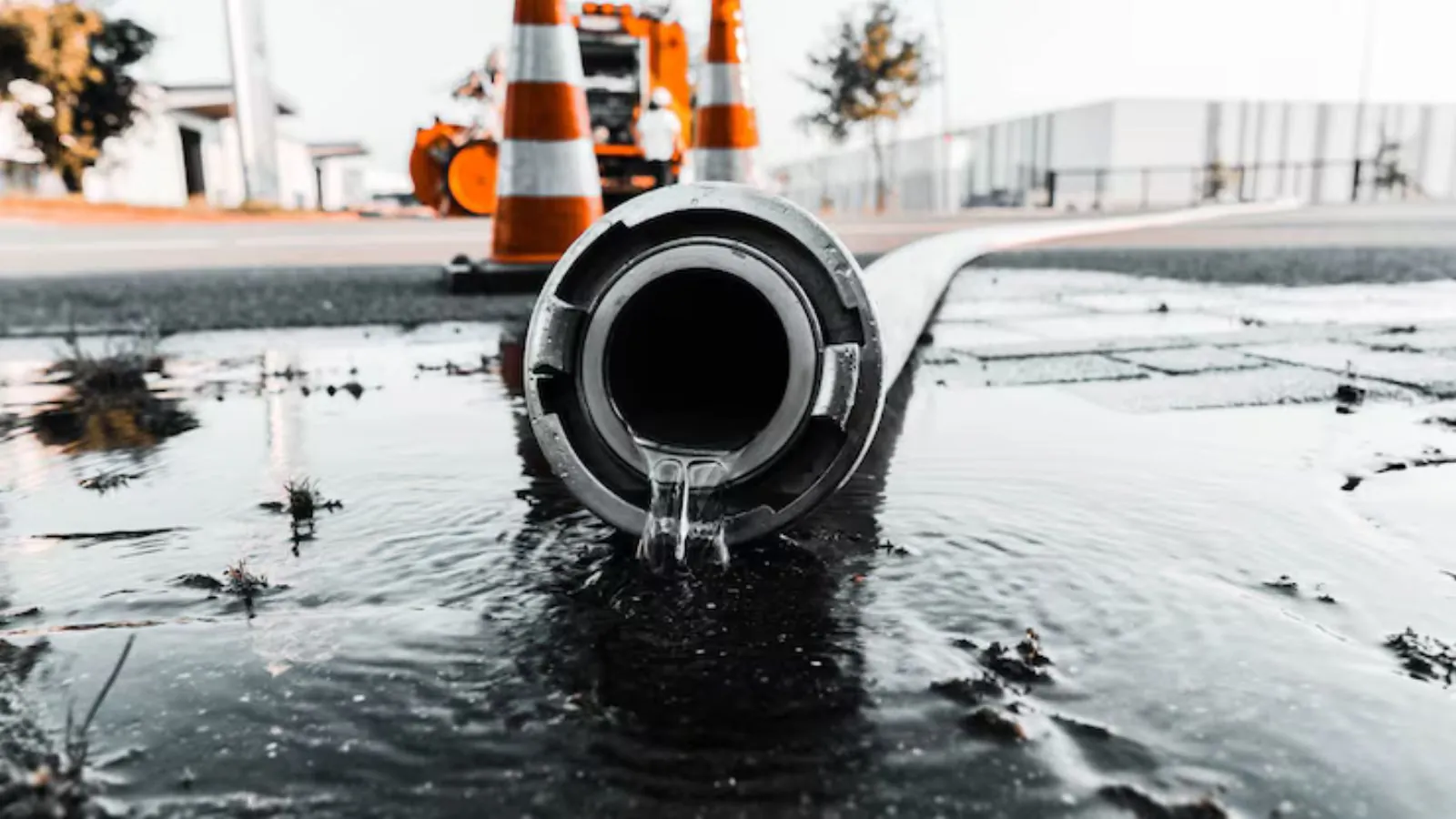
What mitigation means
Mitigation means stopping the damage from getting worse. It is not the rebuild. It covers stopping the source, removing the water, drying what can be dried and removing what cannot. Rebuilding comes after, once the building reads dry. Mitigation is time sensitive, because drywall wicks water upward and wood starts to cup within a day.
Step 1: stop the source and make it safe
The crew starts with safety. Power near the water is checked, and the source is stopped or confirmed stopped by a plumber. If the water is contaminated, protective gear and containment come first. You can help by closing the main valve and keeping everyone clear of standing water and electrical equipment.
Step 2: assess and map the moisture
Moisture meters read how wet materials are, and a thermal camera shows cooler wet areas behind walls and under floors. The crew sketches the wet area, notes the water category and writes the scope. This is where the plan, the equipment count and the days of drying are set. Ask for a copy of the scope.
Step 3: extract the water
Pumps and extraction units pull standing water from floors and carpet. Faster extraction means less water in the materials. The water extraction page explains the equipment. Carpet and pad are lifted or removed when they cannot be dried in place, and the decision depends on the water category.
Step 4: remove what cannot be saved
Wet insulation, soaked pad and drywall that has lost strength are usually removed. Contaminated porous materials are removed and bagged. Removing early lets the structure dry faster and reduces the chance of growth. Photos are taken before removal for the insurance file.
Step 5: dry the structure
Air movers push dry air across wet surfaces and into cavities, and dehumidifiers pull moisture from the air. Readings are taken on every visit and the equipment is adjusted. The structural drying page explains how long drying takes and why a calendar guess is not the answer.
Step 6: verify and rebuild
Mitigation ends when readings match a dry reference for each material. Ask for the readings. Then repairs begin, including drywall, flooring, paint and trim. If drying was late and growth appeared, see mold remediation. Some owners keep the rebuild with their own contractor, and the scope can be split that way.
| Stage | What happens | What to ask for |
|---|---|---|
| Assessment | Meters and thermal imaging map the water | A written scope |
| Extraction | Pumps and extractors remove standing water | Photos of the before condition |
| Removal | Unsalvageable materials come out | An explanation of what and why |
| Drying | Air movers and dehumidifiers run | Daily readings |
| Verification | Readings match dry targets | Final dry readings |
What you can do while the crew works
Stay out of the drying area unless the crew says it is safe. Keep doors and windows in that area closed, because open windows let in humid air and make drying harder. Do not turn the equipment off, even if it is loud, since stopping it extends the job.
Move valuables and fragile items out of the area and keep children and pets away from cords and equipment. Leave a clear path for the crew to bring in gear.
Reading the daily log
Each visit, the crew should record moisture readings at the same spots, along with the temperature and humidity. The numbers should go down. If a reading stalls, something is still feeding it, such as a hidden leak, a wet cavity or an area the equipment does not reach. Ask about it.
A good log lets you and the insurer see progress without guessing. It also shows when the equipment can come out.
What slows drying down
- Water that was not fully extracted at the start
- Closed cavities that air cannot reach, such as inside walls and under cabinets
- Dense materials such as hardwood, plaster and concrete
- Cold or very humid weather
- Equipment that is moved or turned off
Water categories and why they matter
The S500 guide sorts water into three categories. Category 1 starts clean, such as a broken supply line. Category 2 carries some contamination, such as washing machine discharge. Category 3 is grossly contaminated, such as sewage or river flood water. Clean water can turn worse the longer it sits, so time matters.
The category decides how much gets removed and what protection the crew wears. It is the first thing a good dispatcher asks about, and the crew confirms it on site.
Mitigation in a river and coastal town
Westerly water comes from several directions. The Pawcatuck River bounds the town, about nine miles of shoreline face the sound and the salt ponds, and the town hazard plan counts mapped flood hazard parcels as roughly 35 percent of the tax base. That makes the water category question the first one a crew asks.
River and storm water is treated as contaminated, so more is removed. A clean supply line break is a smaller scope. Nearby, the Hopkinton page covers private-well homes, and Wood River Junction covers Richmond.
Questions we hear
How fast does mitigation need to start?
As soon as possible. Water moves into drywall and subfloor quickly, and the longer it sits the more has to be removed.
How do I know the building is dry?
Moisture readings compared to dry targets for each material. Ask for them in writing.
Is mitigation the same as repair?
No. Mitigation limits damage and dries the structure. Repair rebuilds what was removed.
Does mitigation include mold removal?
Not usually. If growth appears, it is a separate scope covered on the mold page.