
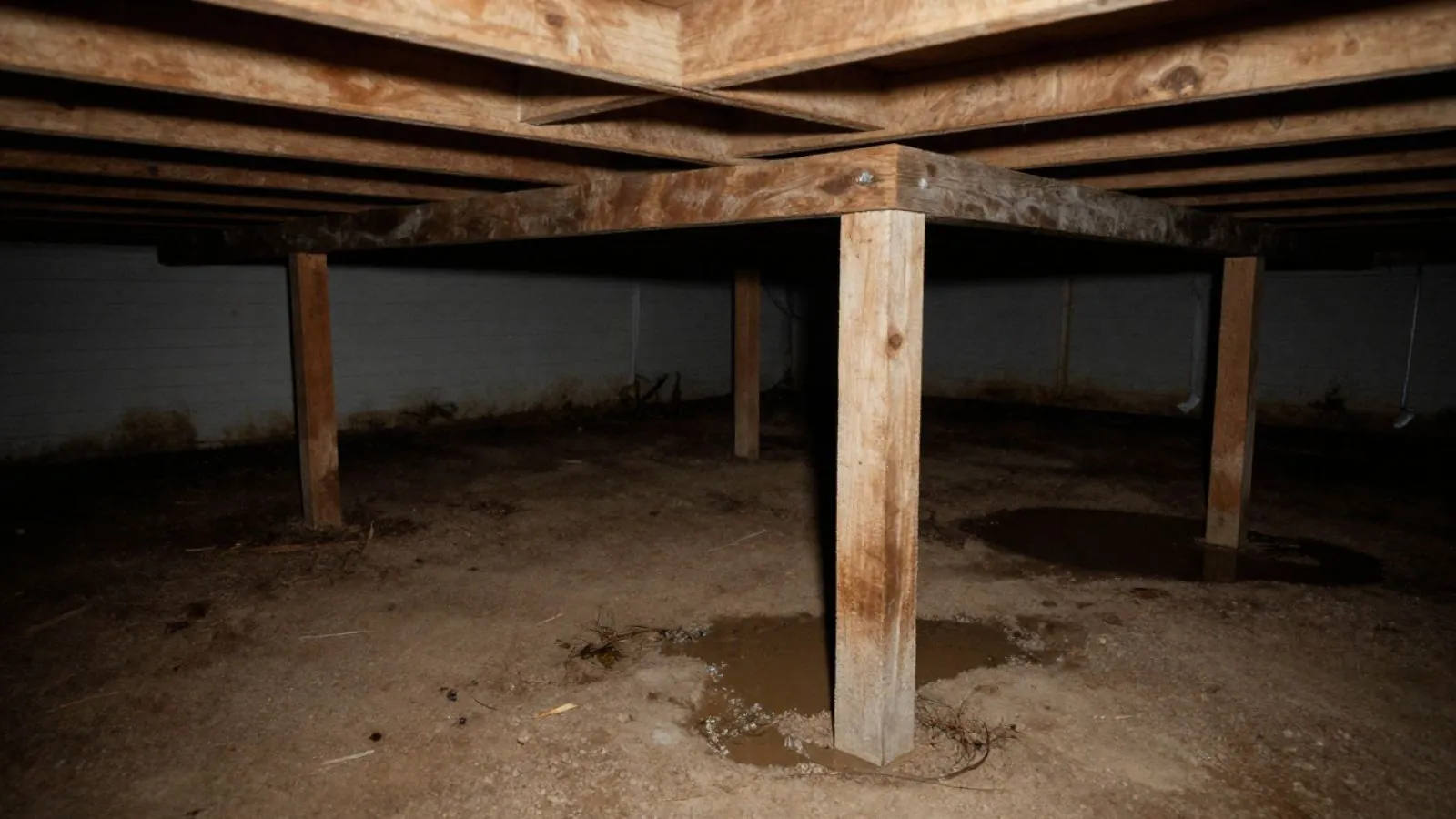
Why a crawl space gets wet
A crawl space is the void between the ground and the first floor. Water arrives from plumbing leaks above, from rain that runs toward the foundation, from high groundwater and from irrigation lines that backflow. Callers have described a crawl space with water after an irrigation backflow, which is a good example of an unexpected source.
Westerly sits near a river, three salt ponds and a coastline, and the town hazard plan maps flood zones around the Pawcatuck River and the ponds. A crawl space in a mapped zone or on low ground can take on water during heavy rain or a surge. Check your address on the FEMA Flood Map Service Center, and ask the Westerly building office what applies.
What water does down there
Wet insulation sags, loses its value and holds moisture against the subfloor. Joists and the subfloor absorb water and can develop mold and, over time, rot. A vapor barrier that is torn or missing lets ground moisture rise. Because the space is closed, humidity stays high and the musty smell carries up into the house.
A crawl space that has been wet for a while may need more than drying. If you see growth or smell mustiness, read the mold remediation page, which describes testing, containment and the S520 standard.
How a crawl space is cleaned up
- Standing water is removed with a small submersible pump and hose.
- Wet insulation is removed and bagged, because it will not dry in place.
- Joists and the subfloor are measured with a moisture meter.
- Dehumidifiers and air movers are placed with ducting, since crawl spaces are tight.
- A vapor barrier and insulation are replaced once the space is dry.
Access matters. Low clearance, narrow hatches and ducts or piping in the way change how equipment is placed. Technicians wear protective gear, and standing water near wiring means the power to that area should be off. That is a job for an electrician and not a homeowner.
Honest limits
Restoration is not waterproofing. If the crawl space takes on water every time it rains, the cleanup treats the damage and does not fix the drainage. A drainage or waterproofing contractor, or a grading and gutter fix, addresses the cause, and the restoration company can document the damage for them.
Related pages include flood damage cleanup for river and surge water and burst pipe cleanup when a supply line is the source.
What crawl space cleanup costs depend on
Insurance may cover a sudden plumbing leak but not groundwater or flood. Check your policy or ask your insurer.
Vapor barriers and ventilation
A crawl space with exposed dirt puts moisture into the air all year. A ground vapor barrier, sealed vents and a dehumidifier are common ways to control it, and a contractor can advise on what fits your house. Fiberglass insulation between the joists sags when it gets wet and holds water against the wood.
Standing water under a house is usually groundwater, a plumbing leak or a drainage problem outside. Fixing the source keeps the problem from returning.
When to go in and when not to
Crawl spaces are tight and can hide wiring, sharp objects and pests. Do not crawl into a space with standing water near electrical lines. A crew uses protective gear and a small pump, and it checks the joists and subfloor with a meter from below.
Stay safe while you wait
- Keep everyone away from standing water near outlets, cords, panels and appliances.
- Shut off power at the breaker only if the panel is dry and you can reach it safely. Otherwise call the utility or an electrician.
- Keep children and pets out of the wet area.
- Do not use a household vacuum on standing water.
- Wear boots and gloves if you must enter, and photograph the area before anything moves.
Questions we hear
Is a wet crawl space an emergency?
It becomes urgent when water is deep or still coming in. The 24/7 line is open at any hour for those cases.
Can you fix the cause of the water?
The cleanup treats the damage. A plumber, drainage contractor or landscaper treats the source.
Should I go into the crawl space myself?
Not if there is standing water, wiring nearby or poor air. It is a confined space.
Will insulation need to be replaced?
Wet insulation is typically removed and replaced, because it does not dry reliably in place.