
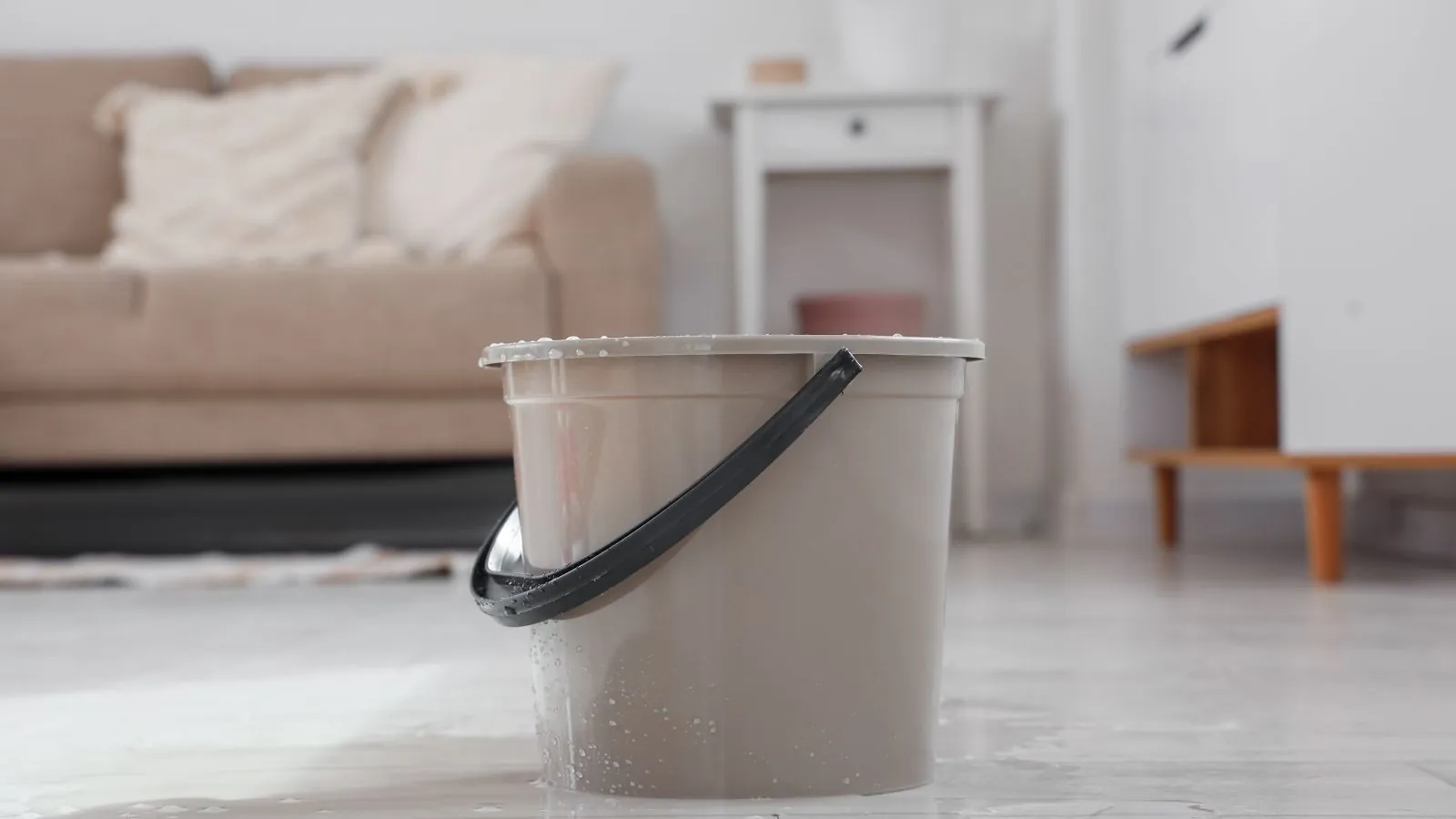
Ceiling leak: what to do first
Water collects above a ceiling and finds a weak point, which is why a ceiling can look fine until it sags like a wet blanket. A bulge holds a lot of water, and puncturing it in a controlled spot with a bucket below can relieve the load, but only if you can stay out of the way of falling material and away from any electrical fixture.
Find the source if you can. An upstairs toilet, tub or washer, a roof leak, an attic duct or a supply line above the ceiling are the usual suspects. Stop the source by closing the shut-off for the fixture or the main valve, and photograph the stain, the drip and the room before anything moves.
Roof leaks and rain: what the water did on the way down
Roof leaks have no page of their own here, because the damage looks the same as any other ceiling leak. Water comes through decking, soaks the insulation and then the drywall, and the stain shows up far from the hole. The roof itself is repaired by a roofer, and temporary measures such as a tarp keep more water out until then.
Westerly's shore and river-valley neighborhoods get hit by wind-driven rain and the occasional coastal storm. Historic Victorian "cottages" in Watch Hill and older homes near downtown have complicated roof lines with valleys and flashing that gather water. The practical point is that wet insulation above a ceiling stays wet for a long time, so the attic space needs checking too.
Typical ceiling water scenarios
- An upstairs bathroom or toilet leaking through the floor above a closet or hall ceiling
- A bedroom ceiling dripping after a heavy rain through a roof valley
- A kitchen or bathroom ceiling stained after a supply line in the floor above failed
- A collapsed section of drywall after water pooled above it for days
- An attic duct or air handler dripping condensation onto the ceiling below
How ceiling water damage is repaired
Wet drywall and insulation are removed back to dry material, which usually means cutting a clean section past the stain. Moisture readings in the surrounding ceiling, wall tops and framing show whether the water spread. Air movers and dehumidifiers dry the cavity. Then new drywall, mud, primer and paint restore the finish.
A ceiling stain that is brown, ringed or growing after the source is fixed often means moisture is still trapped. Paint over wet drywall hides the problem and invites mold. See mold remediation if there is a musty smell or visible growth.
| What you see | Likely cause | Urgency |
|---|---|---|
| Bulge or sag | Water pooled above the drywall | Emergency. Keep clear and relieve safely. |
| Brown ring stain, dry | Old leak that stopped | Find the source and check for moisture. |
| Drip during rain | Roof or flashing leak | Urgent. Contain and arrange temporary roof protection. |
| Stain below a bathroom | Supply or drain leak in the floor above | Urgent. Shut off the fixture. |
If the water also traveled down inside the wall, the wall and drywall page covers that part of the repair.
What ceiling repair costs depend on
Insurance may respond to a sudden roof or plumbing failure. A roof that deteriorated over time is often treated differently. Check your policy or ask your insurer.
Standards behind the work
Professional work on this kind of loss is guided by the ANSI/IICRC S500 standard for professional water damage restoration. You can ask any company whether its crews work to it, and ask how it will document moisture readings and photos for your insurer.
Questions we hear
Do you handle ceiling emergencies at night or on weekends in Westerly?
Yes. The line is answered 24/7. If the ceiling is bulging, keep clear and place a bucket. Call, and the dispatcher will explain next steps.
Should I pop a bulging ceiling?
Only if you can do it safely, away from lights and wiring, with a bucket under it. A bulge holds a lot of water and can drop at any moment. If in doubt, stay out of the room and call.
Does this page cover roof leaks?
Yes, for the water damage they cause below. A roofer repairs the roof itself.
Will the stain come back after I paint?
It can if the drywall is still wet or if the source was not fixed. Dry first, then prime and paint.
Can a ceiling leak cause mold?
It can, because wet drywall and insulation hold moisture. Mold needs moisture and time, so drying quickly is the strongest prevention.