
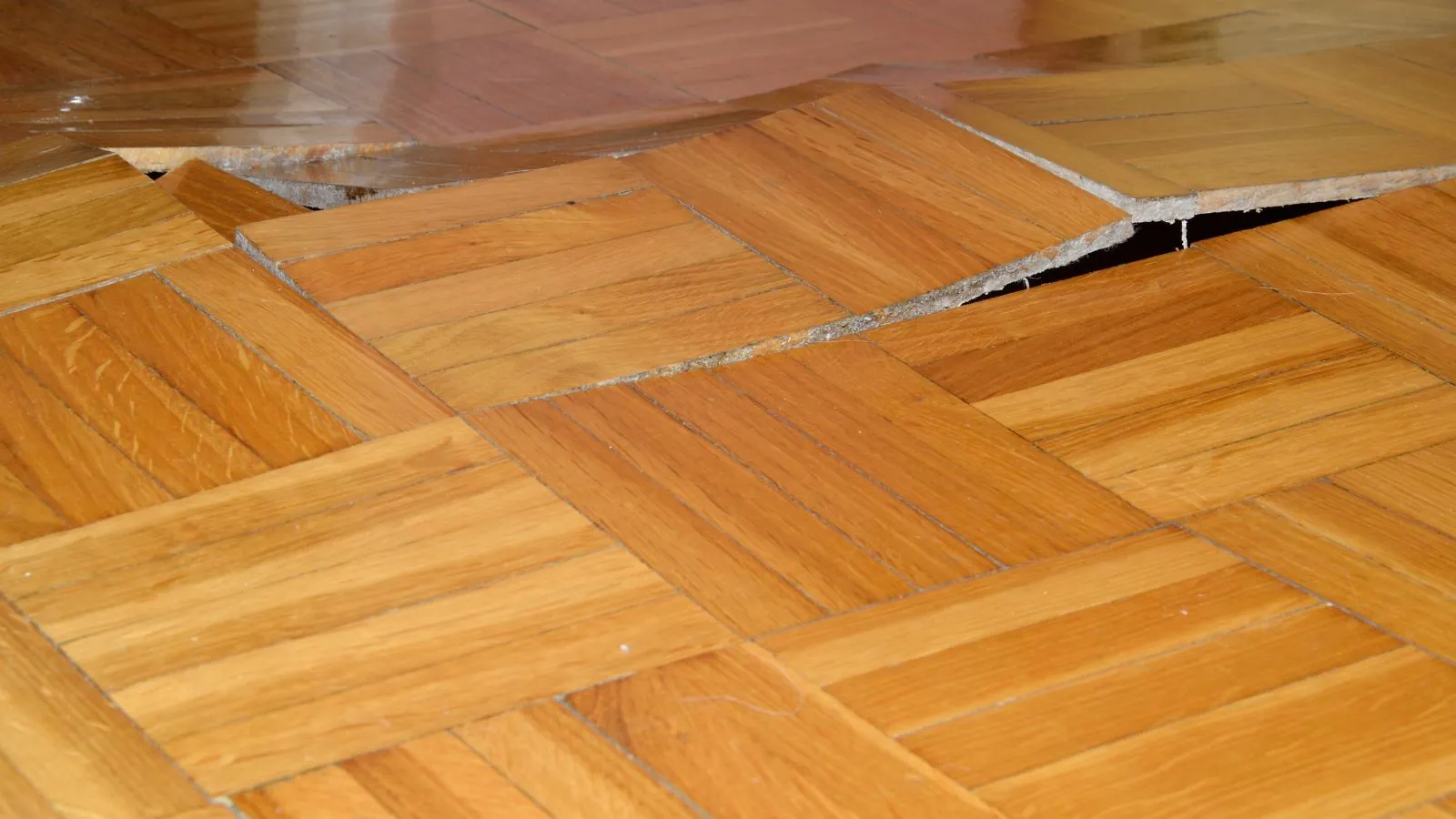
What water does to a hardwood floor
Wood takes in moisture from the bottom and the edges. The boards swell, and because the underside is wetter than the top, the edges rise and the center dips. That shape is called cupping. If boards swell against each other and have nowhere to go, they lift off the subfloor, which is called buckling.
Dark stains and black marks usually mean water sat on the finish for a long time. Gray or black spots in the wood itself may mean mold or a stain from the tannins in the wood. A moisture meter and a close look tell the difference.
Can the floor be saved?
Often yes, when the water was clean, the floor was wet for a short time and the drying started quickly. Boards that cup slightly can flatten as they dry. Floors that sat wet for days, boards that have buckled and any floor soaked with contaminated water are harder to save and may be replaced in the damaged area.
Moisture readings drive the answer. A floor is not ready for sanding until the wood and the subfloor both read in the normal range for the building. Sanding too early can lock in warping and trap moisture under a new finish.
How hardwood floors are dried
- Standing water is extracted and the surface is dried.
- Specialized drying mats or panels pull moisture out through the top of the boards.
- Air movers and dehumidifiers condition the room, with readings each visit.
- The subfloor and the air space below are checked, because water hides there.
- Boards that will not recover are removed and replaced, and the floor is sanded and refinished once dry.
| What you see | What it usually means | Usual next step |
|---|---|---|
| Edges raised, center low | Cupping from moisture below or on the surface | Dry and monitor, then sand if it flattens |
| Boards lifting off the floor | Buckling from heavy swelling | Often replace affected boards |
| White haze under the finish | Moisture trapped in the finish | Dry, then refinish |
| Black marks or dark rings | Long exposure or growth | Inspect and test before sanding |
Engineered flooring and laminate behave differently from solid hardwood, and floors over a crawl space or concrete slab dry differently. See crawl space water damage when moisture comes from below, and slab leak damage when it comes from the concrete. Kitchen floors are covered on the kitchen page, and wet carpet is on the carpet page.
What hardwood floor repair costs depend on
A sudden leak may be covered by insurance, and slow leaks are often excluded. Check your policy or ask your insurer.
Finish, species and installation
Finished hardwood sheds surface water better than unfinished boards, but water still gets in at the seams. Wide boards move more than narrow ones. Nailed floors over plywood behave differently from glued floors over concrete. These details change how fast the floor reacts and how it is dried.
Tell the crew what kind of floor you have and when it was last refinished. Photos of the underside from a basement or crawl space help too.
Patience pays
Resist the urge to sand or replace boards right away. Wood often looks worse on day two than it will once it dries. A floor that is dried slowly and evenly has a better chance of lying flat again than one that is dried fast with heat. Readings every visit show whether it is on track.
Standards behind the work
Professional work on this kind of loss is guided by the ANSI/IICRC S500 standard for professional water damage restoration. You can ask any company whether its crews work to it, and ask how it will document moisture readings and photos for your insurer.
Stay safe while you wait
- Keep everyone away from standing water near outlets, cords, panels and appliances.
- Shut off power at the breaker only if the panel is dry and you can reach it safely. Otherwise call the utility or an electrician.
- Keep children and pets out of the wet area.
- Do not use a household vacuum on standing water.
- Wear boots and gloves if you must enter, and photograph the area before anything moves.
Questions we hear
Will my hardwood floor flatten after it dries?
Light cupping often improves as the wood dries. Heavy buckling usually means replacement of the affected boards.
Can I sand the floor right away?
No. Wait until the boards and subfloor read dry. Sanding early can lock in the damage.
Should I pull up wet boards myself?
Call first. Removing a few boards can help drying, but the right ones need to come out, and the subfloor needs checking.
Do engineered floors dry like solid hardwood?
Not exactly. They have layers, so water can get trapped between them. A moisture reading tells you where it stands.