
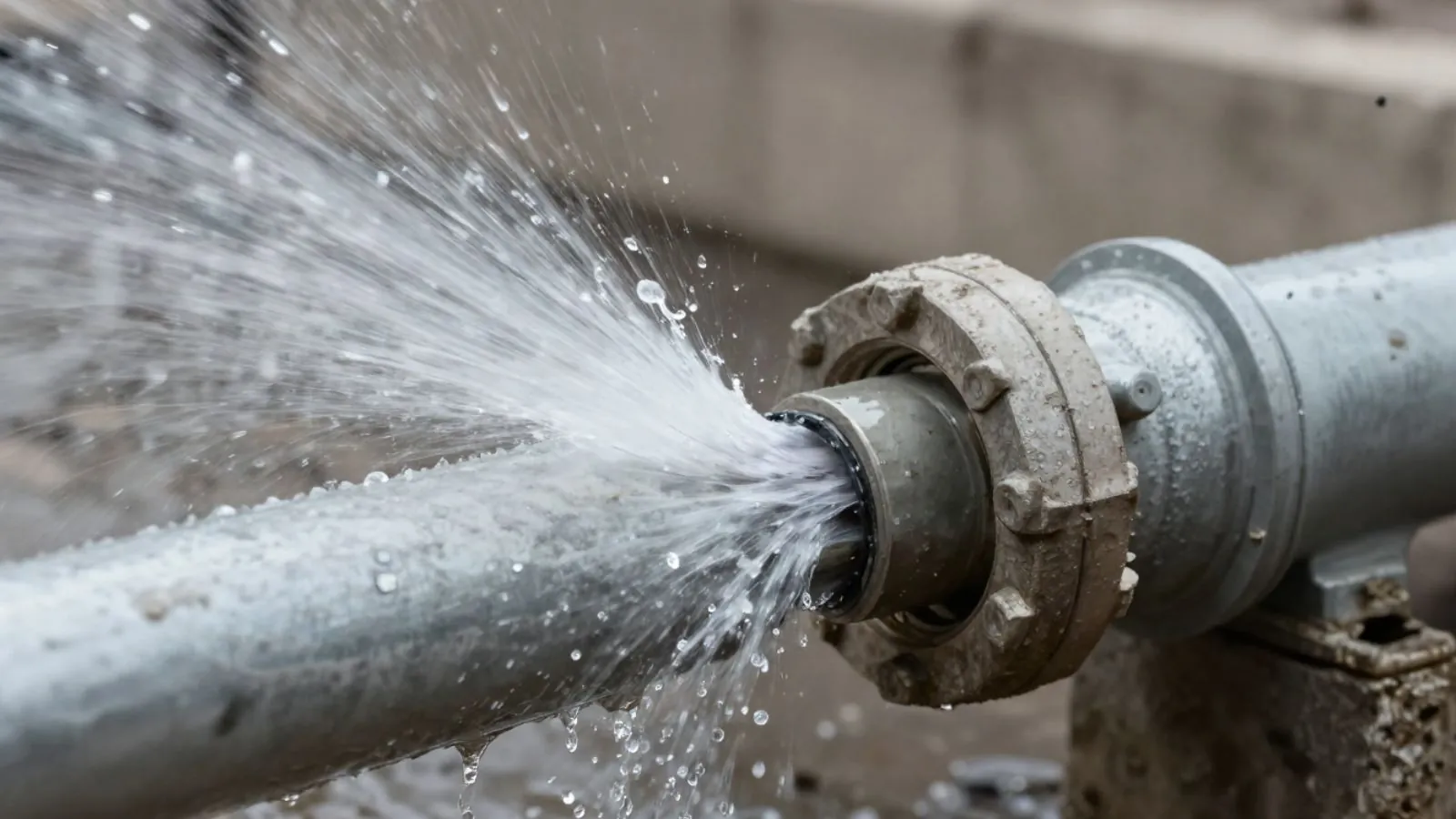
When a frozen pipe becomes an emergency
Water expands when it freezes, and the ice plug itself usually does not do the damage. The pressure that builds between the plug and a closed faucet does, and it splits the pipe at its weakest point. The split can sit hidden behind ice for hours, then release when the pipe warms up. People often find the problem when the house warms, the ice melts and water begins to run.
If a pipe is frozen but not yet split, turning the water off at the main and opening the faucet fully can relieve pressure. If the pipe has already split or water is visible, treat it as a burst pipe and shut off the main right away. Never thaw with an open flame or a torch.
Where freeze damage hides in Rhode Island homes
The pipes most at risk run through spaces the heating does not reach. Exterior walls, garages, crawl spaces, unheated basements, cabinets on an outside wall and lines that serve a seasonal property are the usual places. Westerly has a large stock of seasonal and shore cottages, including the beach communities of Misquamicut and Weekapaug, and a shut-down cottage with a split line can leak for weeks before anyone sees it.
The hazard is a plain winter one, and this page does not claim a local frequency. If you own a seasonal property, the useful step is a drained system or a regular check by a neighbor or property manager, which costs far less than an unattended leak causes.
A cottage with the water meter removed for the season, as the town offers to seasonal accounts, is also protected against many of these losses.
How freeze damage is cleaned up
- Standing water is extracted and the supply is shut off or repaired by a plumber.
- Wet insulation, the lower drywall and any saturated flooring are removed, because insulation holds water against framing.
- Moisture mapping with a meter and thermal imaging finds the water that ran down inside the wall.
- Air movers and dehumidifiers dry the cavity and the room, and readings are logged on each visit.
- Drywall, trim and paint are replaced after the framing reads dry.
Because freeze breaks are often hidden, the drying stage has more to do than the visible mess suggests. See structural drying for how equipment is chosen, and wall and drywall repair for the rebuild.
Symptoms worth acting on
A faucet that runs slowly or not at all in cold weather can mean a frozen line. Frost on an exposed pipe, a bulging section or a new wet stain on a ceiling below a bathroom can all mean ice has already done harm. If you find any of these, shut off the water and check for leaks before the thaw.
What frozen pipe cleanup costs depend on
Insurance often covers a sudden break from freezing, though some policies require reasonable heat to be maintained. Check your policy or ask your insurer.
Standards behind the work
Professional work on this kind of loss is guided by the ANSI/IICRC S500 standard for professional water damage restoration. You can ask any company whether its crews work to it, and ask how it will document moisture readings and photos for your insurer.
Questions we hear
Do you handle frozen pipe emergencies at night or on weekends in Westerly?
Yes. The line is answered 24/7. If a pipe has split, shut the main valve and call. A plumber repairs the line while the water removal starts.
Should I thaw a frozen pipe myself?
Only with gentle, safe heat such as a hair dryer, and only if the pipe has not split. Never use a torch or an open flame. If you see water or cracks, shut the main valve and call.
Can a pipe freeze inside an interior wall?
It can, especially where a pipe runs close to an outside wall or an uninsulated chase. Damage inside a wall is hidden, so moisture mapping matters.
My seasonal home had a freeze break. What now?
Call right away. Water that ran unseen for days is a larger scope than a fresh break, and mold becomes a risk if it sat. See mold remediation if you smell mustiness.