
When standing water is an emergency
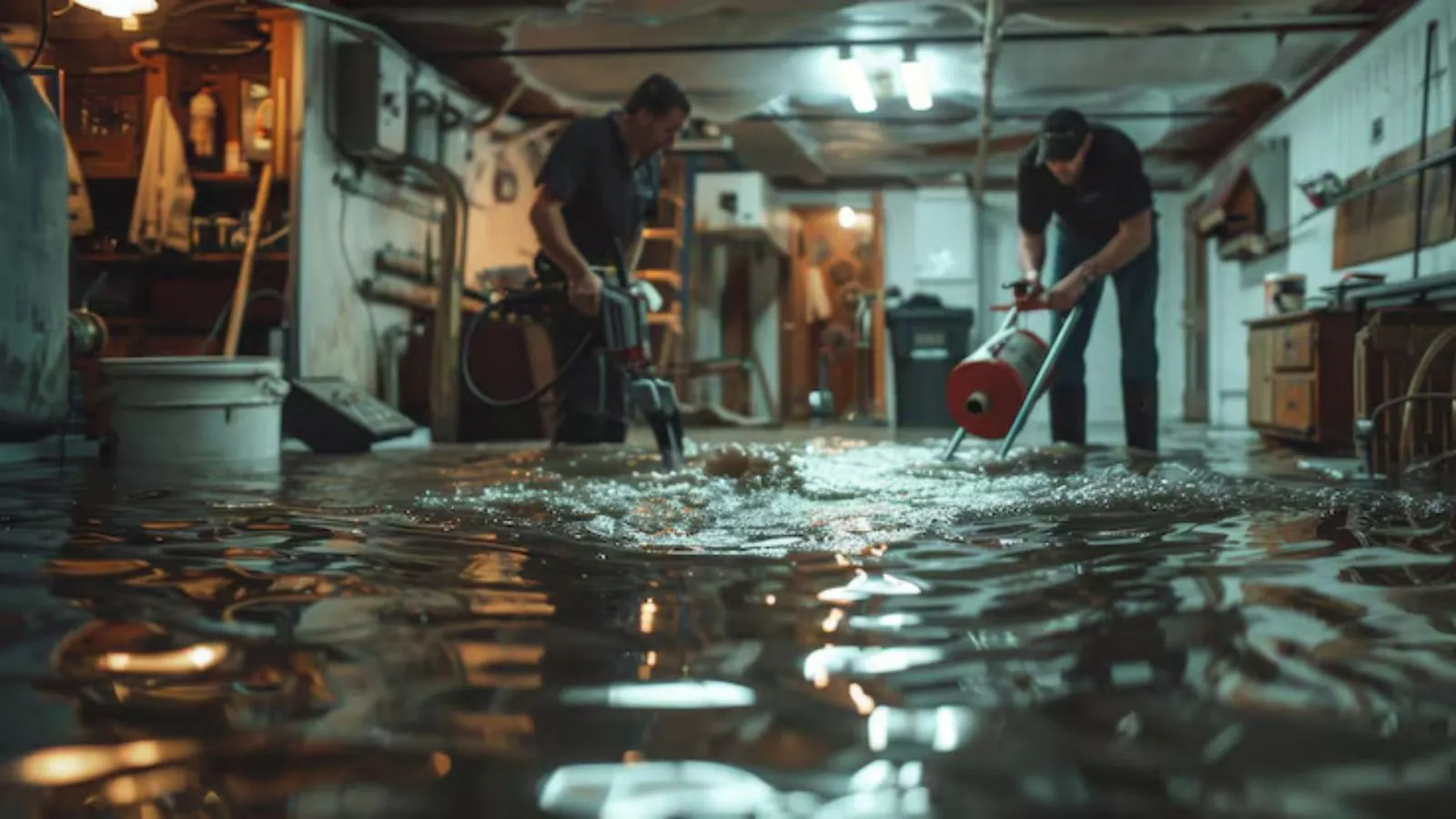
Water extraction means physically removing standing water with pumps and extraction units, before the drying stage begins. It is the first mitigation step on a burst pipe, a failed washer, a flooded laundry room or a wet basement. Without it, dehumidifiers and air movers are fighting a flood with a fan.
Callers usually describe it in plain terms. The laundry room is ankle deep, the carpet squishes, water is coming through the foundation after rain, or someone found the cellar wet this morning. Each of those is a request for the same thing, which is getting the water away from the house and out of the materials as fast as it can be done safely.
Before extraction can start, power has to be safe. If water reaches an outlet, appliance, extension cord or the electrical panel, stay out and have the power shut off by a licensed electrician or the utility. Do not stand in water to flip a breaker.
How water is removed
The equipment depends on the depth. Shallow water on a hard floor is pulled with a wand or a squeegee tool on an extraction unit. Deeper water, such as a flooded cellar, needs a submersible pump and hose run to a safe discharge point. Carpet and pad are extracted in passes with a weighted tool, because a pad can hold far more water than the surface shows.
Once the standing water is gone, technicians use a moisture meter and a thermal camera to find water that moved. Baseboards, the bottom of drywall, kitchen toe-kicks and the cavity under a hardwood floor all hold water that extraction alone cannot reach. That is when structural drying takes over, with air movers and dehumidifiers running until readings fall.
| Water category | Typical source | What changes on site |
|---|---|---|
| Category 1, clean | Supply line, sink overflow, rain through a roof | Extract and dry. Carpet and pad are often kept if caught early. |
| Category 2, gray | Washing machine, dishwasher, sump overflow | Extract, sanitize, and expect to remove pad and some porous materials. |
| Category 3, black | Sewage, river flood water | Protective gear, removal of porous materials, and strict containment. See sewage backup cleanup. |
Water from the street, the river or the yard
Not all water comes from your own plumbing. In Westerly the Pawcatuck River bounds the town on the west and north, and in March 2010 it reached a record 15.38 feet at the USGS gauge during a flood that kept the river above flood stage until April 12. If a river or coastal surge put water in your building, treat it as contaminated and read the flood damage cleanup page.
If the water is coming from the public main in the street, the town water and sewer department handles emergency work on public lines at all hours. Your side of the meter is yours to stop, which is why knowing where your main shut-off valve is saves the most damage.
One honest limit: this line removes water from buildings. Pumping a yard, a pool or an open field is a different service, and callers who ask about it should be sent to a company that does exterior pumping.
What extraction costs depend on
Insurance may respond when the cause is sudden and accidental, such as a burst supply line. Flood is usually excluded from a standard homeowners policy. Check your policy or ask your insurer, and keep the photos and receipts.
Standards behind the work
Professional work on this kind of loss is guided by the ANSI/IICRC S500 standard for professional water damage restoration. You can ask any company whether its crews work to it, and ask how it will document moisture readings and photos for your insurer.
Stay safe while you wait
- Keep everyone away from standing water near outlets, cords, panels and appliances.
- Shut off power at the breaker only if the panel is dry and you can reach it safely. Otherwise call the utility or an electrician.
- Keep children and pets out of the wet area.
- Do not use a household vacuum on standing water.
- Wear boots and gloves if you must enter, and photograph the area before anything moves.
Questions we hear
Do you handle water extraction emergencies at night or on weekends in Westerly?
Yes. The line is answered 24/7, including nights, weekends and holidays. Call, describe how much water there is and where it came from, and the dispatcher will explain what happens next. Meanwhile stop the source if it is safe and stay clear of anything electrical.
How soon should standing water be removed?
As soon as it is safe. Water moves into drywall, wood and padding quickly, and the longer materials stay wet the more of them have to be removed instead of dried. Mold needs moisture and time, so a wet structure should be dried in the first days.
Can you pump out my yard or pool?
No. This service removes water from inside buildings. Exterior pumping of yards, pools and fields is a different trade, and a company that does that work is the right call.
Is extraction the same as drying?
No. Extraction removes standing and soaked-in water. Drying then lowers the moisture left in framing, drywall and floors with air movers and dehumidifiers. Most jobs need both, in that order.
Will the work include repair?
Extraction is the first stage. If walls or floors were damaged, a scope for drywall repair or flooring comes after the structure is dry.