
Commercial water emergency: first steps
Commercial losses have more moving parts than a house. There are tenants, landlords, inventory and often several floors. The first steps are the same. Stop the water, protect people, and call. Then document, because commercial insurance wants more paperwork.
Check who holds responsibility. A tenant may be responsible for contents while the landlord covers the building, or the reverse. Notify the landlord, the property manager and your insurer quickly.
Businesses in Westerly and what they face
Westerly has a historic downtown, shops along Post Road and a seasonal beach economy at Watch Hill and Misquamicut. The town hazard plan counts special flood hazard area parcels as about 35 percent of the property tax base, so a good share of commercial property sits in mapped flood zones.
Superstorm Sandy swept buildings off their foundations in Misquamicut in 2012. The practical point is business continuity. Know who to call before the storm, and keep records of your inventory and your contents.
Types of commercial water loss
- A broken supply line or sprinkler head in a shop, office or restaurant kitchen
- A roof or flashing leak above a retail space or storage area
- A sewage backup into a restroom or a basement kitchen
- A storm or flood event that wets a ground floor
- A vacant property where a leak ran unseen for days
- A multi-unit building where water runs from one unit into several
How a commercial job differs
The scope is usually staged around operations. Water is extracted first, then affected areas are isolated so the rest of the building can operate. Drying equipment is placed to limit disruption, and work can be scheduled for overnight hours. Moisture logs and photos are kept for the insurer, the landlord and the lender.
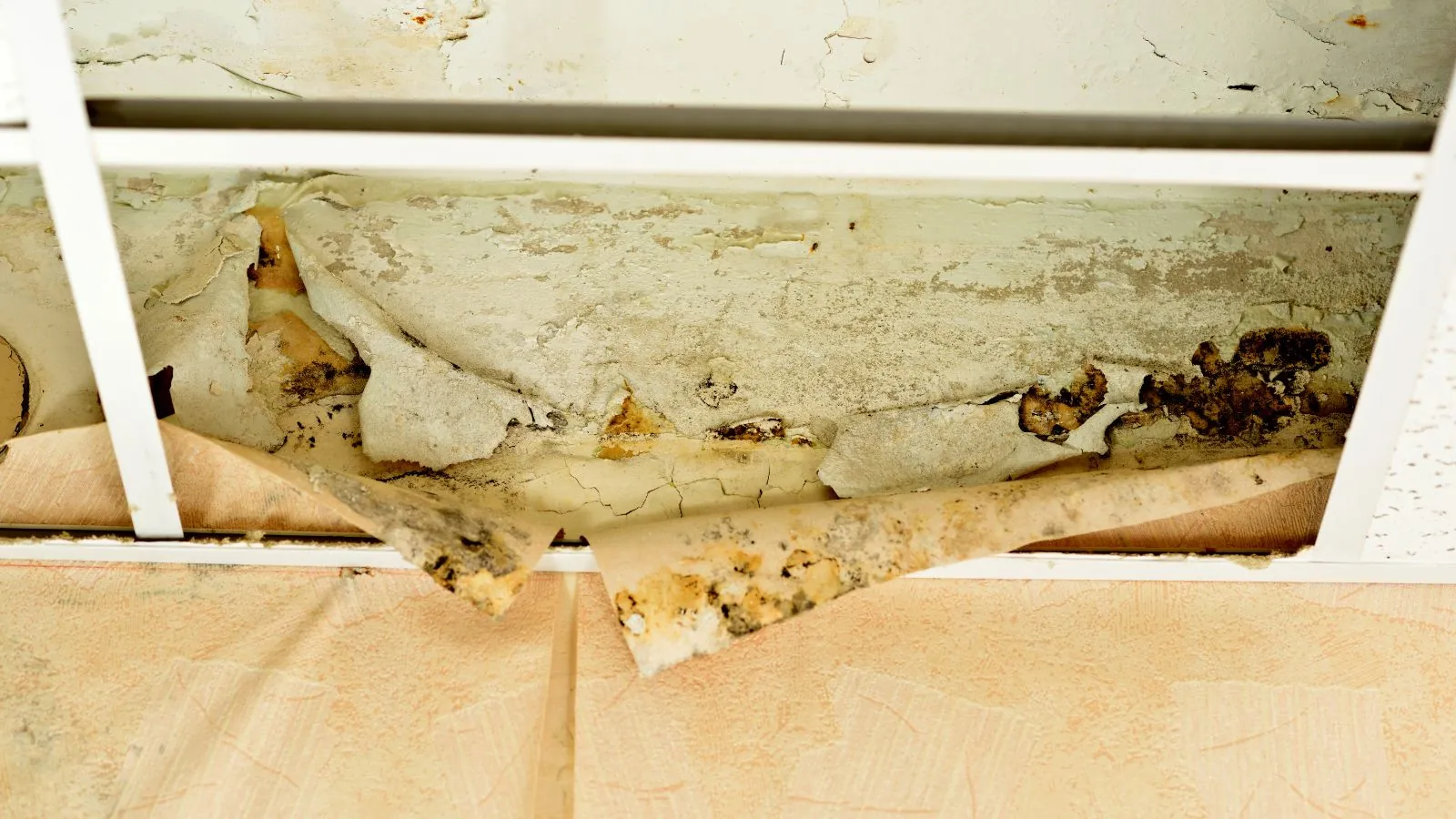
Large or unusual losses, such as a vacant building with a long-running leak, need a written scope that explains how the loss happened and what has to be removed. A leak that has run for days can lead to mold in the building, and the mold remediation page explains the testing and removal process. Water that has run through ceilings is also described on the ceiling page.
| Item | Why it matters |
|---|---|
| Photos and video of the loss | Shows the condition before work moves anything |
| Inventory list with values | Needed for a contents claim |
| Moisture readings and logs | Proves drying progress and final dry status |
| Lease terms and policy numbers | Shows who is responsible for what |
| Downtime notes | Supports a business interruption claim if you have that coverage |
What commercial restoration costs depend on
Commercial insurance differs from homeowners coverage. Some policies include business interruption, and flood is typically separate. Check your policy or ask your insurer.
Roofs, sprinklers and shared systems
Commercial buildings have systems that homes do not. A flat roof can pond water and leak into a retail space, a sprinkler head can discharge for minutes and soak several rooms, and a shared riser can leak into units above and below. Knowing where the shut-offs are for each system saves a lot of damage.
Post the shut-off locations near the front door and tell new staff. After a loss, ask the property manager which system failed and who is responsible for repair.
Planning before a loss
Keep a list of inventory, serial numbers and policy numbers somewhere you can get to when the building is closed. Save the 24/7 line in staff phones. Photograph the space once a year so a claim has a baseline. A short written plan for who calls whom is worth the time.
Standards behind the work
Professional work on this kind of loss is guided by the ANSI/IICRC S500 standard for professional water damage restoration. You can ask any company whether its crews work to it, and ask how it will document moisture readings and photos for your insurer.
Questions we hear
Do you handle commercial water emergencies at night or on weekends in Westerly?
Yes. The line is answered 24/7. Call and describe the building, what is wet and whether the water is still running.
Can you work around business hours?
Work can often be phased or scheduled to limit disruption. Ask when you call.
Do you handle multi-unit buildings?
Yes. Water can pass between units, so the scope covers each affected unit.
Who is responsible for repairs, landlord or tenant?
It depends on the lease and the policies. Notify the landlord and your insurer early and keep records.