
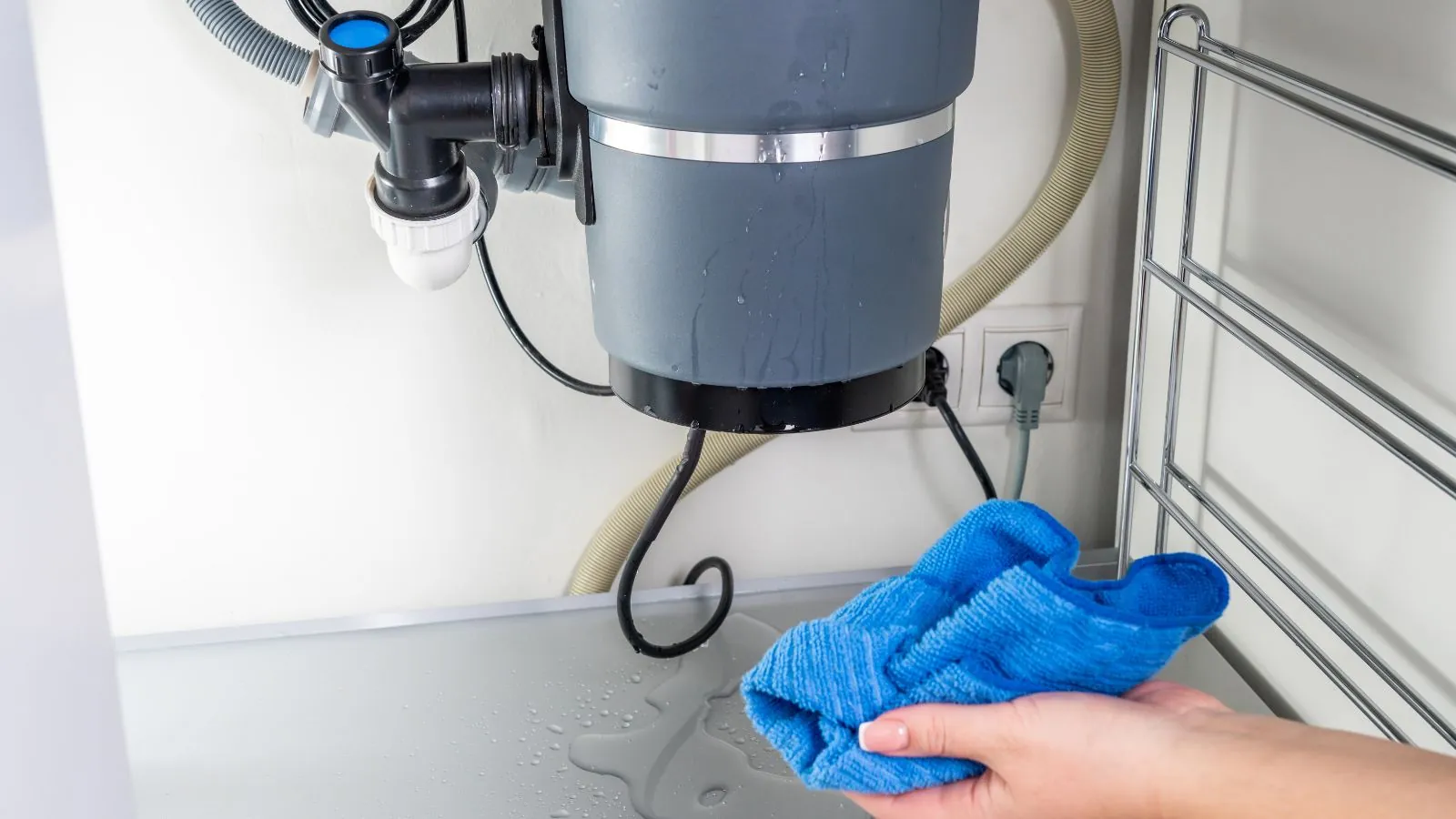
Appliance leak: what to do first
Most appliances have a shut-off valve on the wall or under the unit. A washer has two, one for hot and one for cold. A dishwasher has one under the sink, and a refrigerator ice maker has a small valve on its line. Close the right one. If you cannot find it, close the main water valve for the house.
Do not reach behind an appliance that sits in water. Cords and outlets are the hazard. A leak that has run for hours has usually moved under the flooring and into the cabinets next to it.
Which appliances cause the damage
The usual failures are washer supply hoses that burst or loosen, dishwasher door seals and drain lines, refrigerator water lines and ice makers, and the drain hoses on a dehumidifier or a utility sink. A single failed connector can run unnoticed under a closed appliance.
Callers describe water damage underneath a leaking dishwasher, or a washer valve that broke and ran while no one was home. In both cases the water travels under the finish floor, into the subfloor and sideways to the next room before it shows.
Where appliance water goes
- Under vinyl, laminate or tile and into the subfloor
- Into the cabinet base and the toe-kick next to a dishwasher
- Through the floor into the ceiling below, if the appliance is on an upper floor
- Into the wall behind the washer box, through the valve and drain connections
How the cleanup works
Standing water is removed first, then the floor is opened where needed. Laminate and engineered flooring often have to come up to dry the subfloor underneath. Tile can be dried through its grout lines with the right equipment, and cabinet bases are checked with a moisture meter. Air movers and dehumidifiers run until readings are normal.
A washer leak is often clean or lightly gray water, which is more forgiving than a sewage leak, and many materials can be dried if the response is quick. If an appliance leaked for days, the structure may have progressed to mold, and the mold remediation page covers that case.
The kitchen water damage page covers cabinets, toe-kicks and under-sink damage in detail, and hardwood floor repair covers boards that cup after a washer valve break.
What appliance leak cleanup costs depend on
Insurance may respond when an appliance supply line fails suddenly. Slow leaks and maintenance issues are commonly excluded. Check your policy or ask your insurer, and keep the failed hose or part if you can.
Hoses and fittings that fail
Most appliance floods start at a connection, not the machine. Rubber washer hoses crack and burst under pressure, dishwasher supply fittings loosen, and a refrigerator ice maker line can drip behind the unit for weeks. Braided stainless hoses last longer, and replacing old rubber ones costs little compared with a flooded floor.
Look behind and under each appliance a couple of times a year. A damp spot, a stain on the floor or a swollen baseboard is an early warning.
After the appliance is repaired
Once a technician fixes the source, the water that already spread still needs to be dried. Cabinets and toe-kicks around a dishwasher and the floor under a washer are common hiding spots. Readings show whether the subfloor is dry before flooring goes back.
If the unit has been moved, check the shut-off valves too. A valve that does not close fully is a problem for the next leak. Keep the old hose if the insurer asks to see it.
Standards behind the work
Professional work on this kind of loss is guided by the ANSI/IICRC S500 standard for professional water damage restoration. You can ask any company whether its crews work to it, and ask how it will document moisture readings and photos for your insurer.
Questions we hear
Do you handle appliance leak emergencies at night or on weekends in Westerly?
Yes. The line is answered 24/7. Close the appliance valve or the main valve and call.
Do you repair the appliance?
No. An appliance technician or plumber fixes the unit or the hose. This service removes the water and dries the structure.
How do I know if water went under my floor?
Cupping, soft spots, a musty smell or a stain on a ceiling below are signs. A moisture meter finds water you cannot see.
Is an appliance leak covered by insurance?
Often, when it is sudden. Ongoing leaks and wear are commonly excluded. Check your policy.