
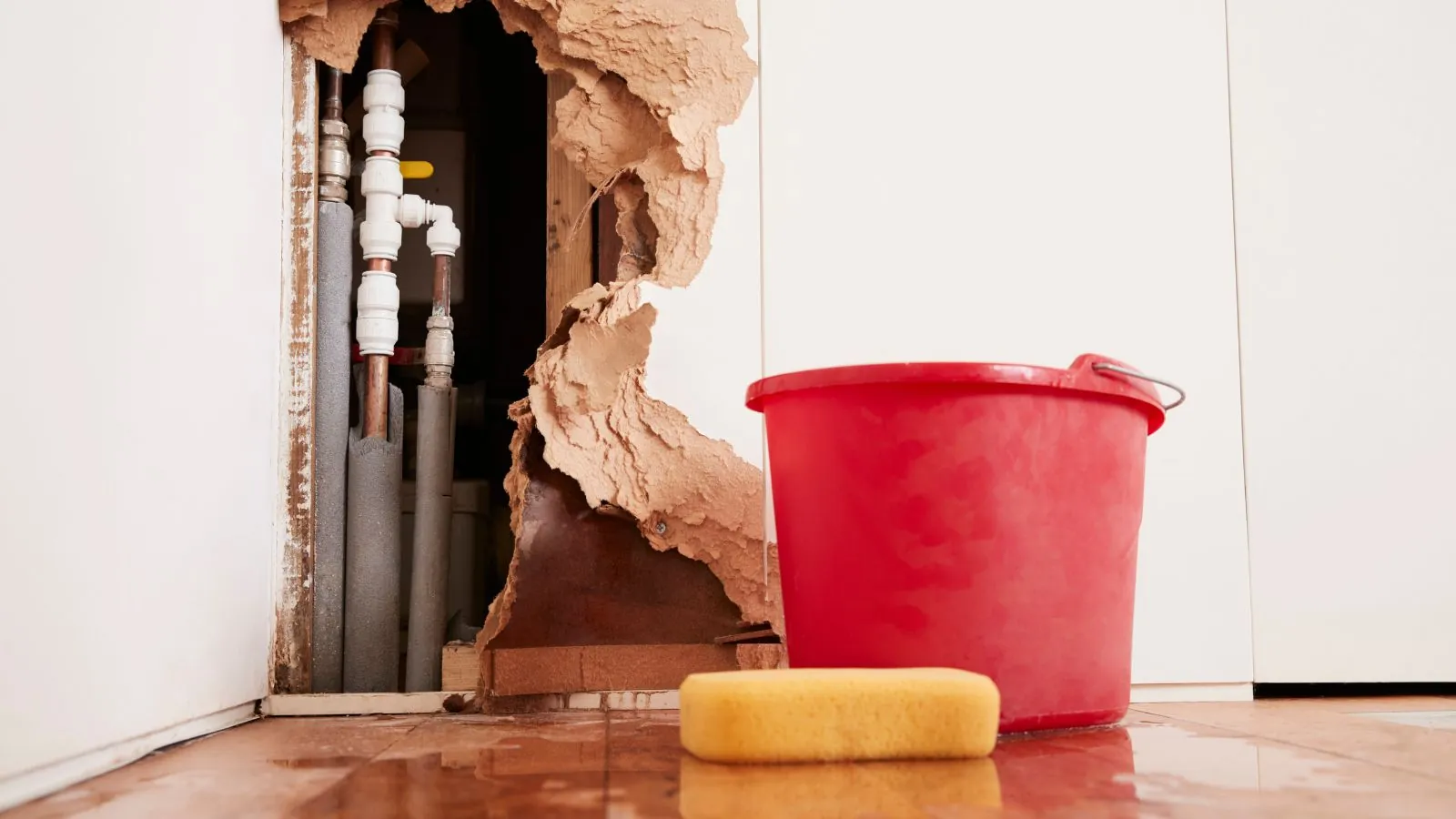
Burst pipe: what to do first
The most important step happens before any restoration crew arrives. Find the main shut-off valve, which is usually where the water line enters the house, near the meter or in the basement, and turn it fully closed. Pressurized supply lines keep pushing water until that valve is shut, and a pipe under a sink or inside a wall can release gallons every minute.
Then deal with power. If water is near outlets, light fixtures or the panel, do not touch them while standing in water. Have the power cut by an electrician or the utility. Photograph the pipe, the wet areas and anything damaged before it is moved, and call a plumber to repair the line while the restoration starts.
Where burst pipe water goes
Pipes burst in places that hide the water. A split under a kitchen sink soaks the cabinet floor and runs toward the dishwasher and the baseboards. A pipe inside an interior wall wets the insulation, the drywall on both sides and the floor plate. A line above a ceiling can bring the whole ceiling down, which is covered on the ceiling water damage repair page.
Callers describe it as water across the kitchen floor, a whole house taking water, or a leak everywhere. The scope grows fast with every minute the pipe runs, which is why speed in shutting the valve changes the job more than anything else.
How a burst pipe job runs
- Standing water is removed with an extraction unit or wand.
- Wet baseboards, the lower strip of drywall and soaked insulation are opened up, because cavities will not dry through paint.
- A moisture meter and thermal camera map how far the water traveled, including under cabinets.
- Air movers and dehumidifiers run until readings match dry reference materials.
- Drywall, flooring and cabinets are repaired once the structure is verified dry.
The drying stage is covered in detail on the structural drying and dehumidification page. If the pipe was under a sink or behind a refrigerator, the kitchen water damage page covers the cabinets and toe-kicks that need special attention.
Why pipes fail
Supply lines fail from age, a bad fitting, pressure spikes or ice that blocked the pipe and then thawed. The frozen pipe water damage page covers the ice case, which has its own set of shut-off steps. A connector hose on a washer or dishwasher can also burst, and the appliance leak page is the right place for that.
Westerly's water department says a leaking toilet is the most common cause of an unexpectedly high bill, so a quiet leak often shows up on the bill before it shows up on the floor. A bill that jumps for no clear reason is worth a look at every supply line in the house.
What burst pipe cleanup costs depend on
Insurance often responds to sudden and accidental pipe bursts, while a slow leak over months often falls outside coverage. Check your policy and ask your insurer, and keep the plumber's invoice with the photos.
Standards behind the work
Professional work on this kind of loss is guided by the ANSI/IICRC S500 standard for professional water damage restoration. You can ask any company whether its crews work to it, and ask how it will document moisture readings and photos for your insurer.
Questions we hear
Do you handle burst pipe emergencies at night or on weekends in Westerly?
Yes. The line is answered 24/7. Shut off the main water valve if you can reach it safely, then call and describe where the water is going. A plumber stops the leak at the source while the water damage work begins.
Do you repair the broken pipe?
No. A plumber repairs the pipe. This service removes the water, dries the structure and repairs the damaged walls and floors afterward.
How do I find my main water shut-off?
It is usually where the water line enters the building, near the meter or in the basement or utility area. Practice turning it before you need it. Everyone in the household should know where it is.
Is a burst pipe covered by homeowners insurance?
Often, if the loss was sudden and accidental. Policies differ on gradual leaks and on the cost of the pipe itself, so check your policy or ask your insurer before assuming.
How long will the drying take?
It depends on how many rooms and cavities are wet. Moisture readings on each visit decide when equipment comes out, not a calendar date.