
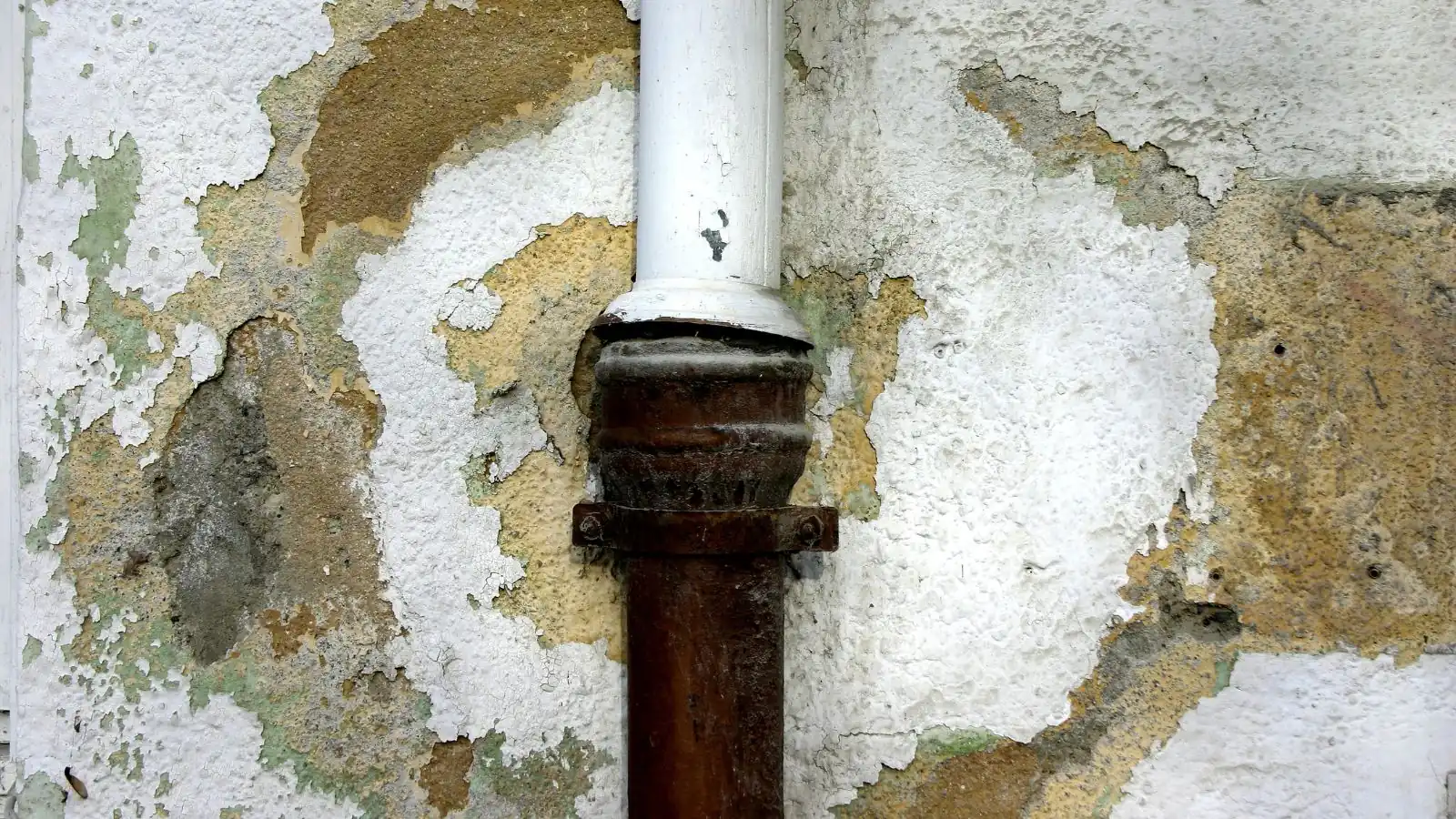
Signs that water is inside a wall
- Paint is bubbling, peeling or cracking.
- A stain is spreading, or a brown ring has appeared.
- Drywall is soft, crumbling or swollen at the baseboard.
- The wall is cool or damp to the touch.
- There is a musty smell with no visible source.
These signs mean water has been in the wall for some time. A pipe inside the wall, a window or roof leak, or water that wicked up from a wet floor can all be responsible. Find the source and stop it before drying, or the wall will get wet again.
Drywall: dry it or cut it out?
Drywall is gypsum between sheets of paper. When it is wet, it loses strength, and the paper holds moisture that feeds growth. Clean water that was caught early can be dried in place with the wall cavity opened a little or with drilled vents. Water that sat for a long time, or sewage and flood water, means cutting out the wet section.
Technicians cut the wall higher than the visible line because water wicks upward. Insulation inside the wall is usually removed when wet. Framing is dried and checked with a meter before new drywall goes up.
How wall repair is done
- Moisture mapping finds how far the water went inside the wall.
- Wet insulation and drywall are removed, and framing is dried.
- Air movers and dehumidifiers run, with readings on each visit.
- New drywall is hung, taped and sanded once the framing reads dry.
- Primer and paint finish the wall, and trim is replaced.
The drying stage is the same one described on the structural drying page. A wall behind a sink is common in kitchens, as described on the kitchen page, and a wet wall in a lower level is part of the basement cleanup. If drywall stayed wet long enough to grow mold, see mold remediation.
Plaster and older homes
Westerly has many older homes, including the North End Historic District, which has buildings from 1832 to 1955. Older walls may be plaster over lath instead of drywall. Plaster dries slowly and can crumble when it stays wet. A repair may need a plasterer, and it may involve materials the building was built with.
What wall repair costs depend on
Paint, texture and matching
After drywall is replaced, the new section has to be taped, mudded and sanded, and then primed and painted. Texture, sheen and the age of the old paint all affect how well the repair blends. It often takes a coat across the whole wall, up to a corner, to make the patch disappear.
Ask whether paint and finish are in the scope. Some owners handle that part themselves or with a painter.
Baseboards, trim and outlets
Baseboards and trim soak up water and are often removed so the wall cavity can dry. Outlets and switches in a wet wall should be treated with care. The power to a wet wall is shut off at the breaker, and an electrician checks the wiring before the wall is closed. Do not use a wet outlet.
Window and door casings in a wet wall may swell. Wood trim can often be saved if it is dried slowly and the finish is intact.
Ceilings and walls together
When water comes through a ceiling, it runs down the walls too. Check the top of each wall below a leak. A stain on the ceiling is often the smaller part of the wet area.
Standards behind the work
Professional work on this kind of loss is guided by the ANSI/IICRC S500 standard for professional water damage restoration. You can ask any company whether its crews work to it, and ask how it will document moisture readings and photos for your insurer.
Questions we hear
Can I paint over a water stain?
Not until the wall is dry and the source is fixed. Paint over a wet wall traps moisture and the stain returns.
Does all wet drywall have to be replaced?
No. Clean water caught early can sometimes be dried in place. A meter tells you.
How do I know if there is water inside a wall?
Staining, bubbling, softness and odor are signs. A moisture meter and a thermal camera show the extent.
Do you repair plaster walls?
Plaster repair can need a specialist. Call and describe the wall, and the scope will be explained.