
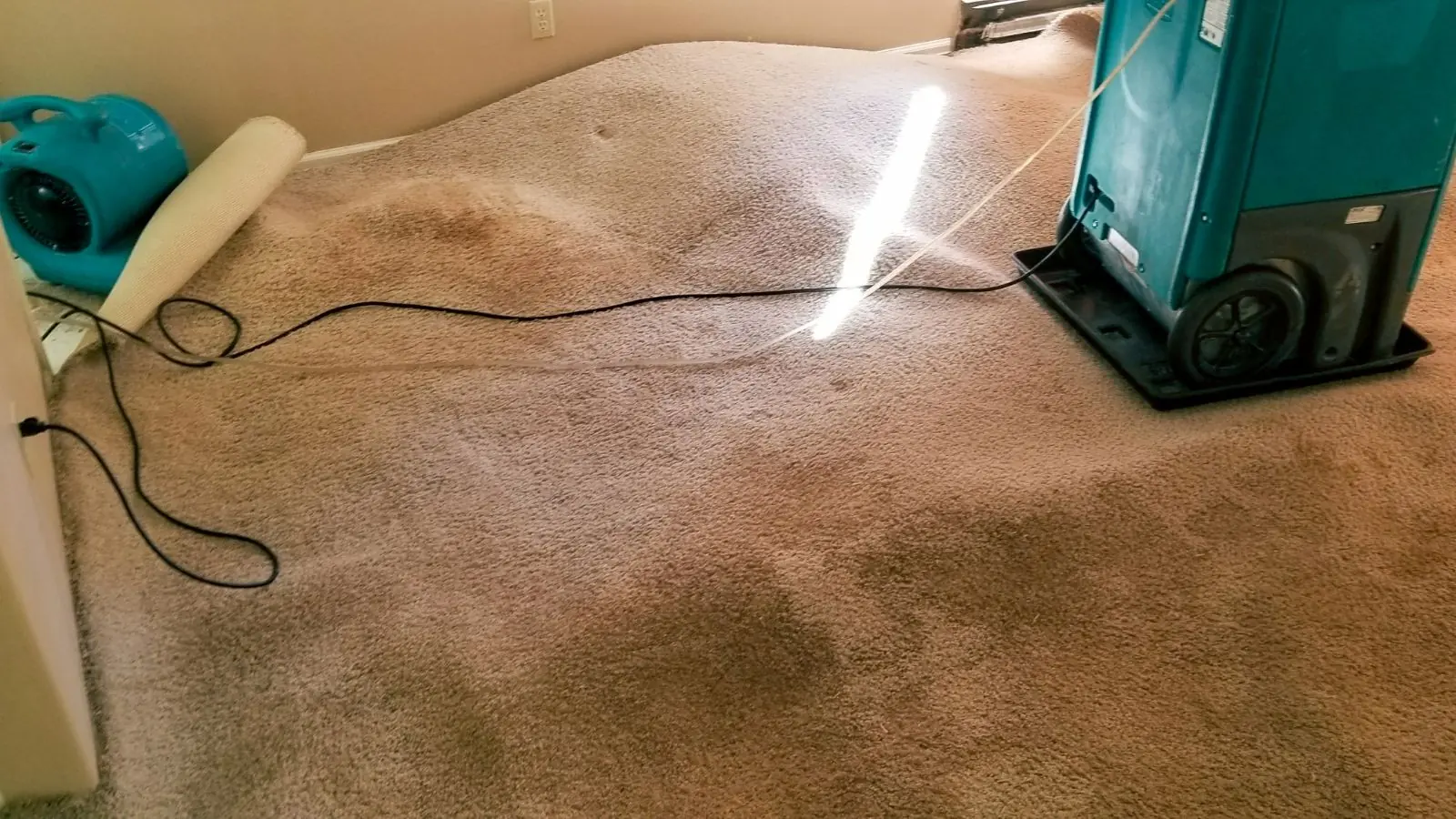
Carpet after water: save it or replace it?
Carpet has three parts. The surface fibers dry quickly. The pad underneath holds water like a sponge. The subfloor beneath the pad is what dries last. A carpet that feels damp on top can be soaked below, and that is where odor and mold start.
The category of water decides most of the answer. Clean water from a supply line can often be extracted, and the carpet can be dried in place or lifted and dried. Sewage or flood water is different. The carpet and pad are usually removed, and the floor is cleaned and treated.
How wet carpet is dried
- Water is extracted with a powerful extraction unit, from the fibers and the pad.
- The carpet is lifted at the edge so air can reach the pad and the subfloor.
- A wet pad is usually removed, because it holds water and dries slowly.
- Air movers and dehumidifiers dry the carpet and the room, with moisture readings.
- The carpet is stretched back or replaced, and the subfloor is checked before it goes down.
Extraction is the first step, and the water extraction page explains the equipment. If the water came from a toilet or drain, read sewage backup cleanup before deciding what to keep. Carpet on a lower level often goes with the basement cleanup scope.
When carpet is not worth saving
Carpet is replaced when the water was contaminated, when it stayed wet for days, when the backing has delaminated or when the pad smells of mildew. Low-grade or thin carpet is often not worth the labor of lifting and drying. Older carpet can shrink or lose its backing bond when wet.
Insurance policies often pay for reasonable removal and replacement, so ask your adjuster before throwing anything away. Keep a swatch and photos so the carpet can be matched or priced.
| Water source | Carpet | Pad |
|---|---|---|
| Supply line or clean leak | Often dried in place | Often replaced if soaked |
| Washing machine or dishwasher | Often dried, with a closer check | Often replaced |
| Sewage or flood water | Usually removed | Removed |
What carpet restoration costs depend on
Concrete floors and wood subfloors
The floor under the carpet matters. On a concrete slab, water spreads flat and the pad holds it against the slab, so lifting the pad is important. On a wood subfloor, water can soak into the plywood and the joists below, and the subfloor takes longer to dry than the carpet does.
A moisture meter reads each surface. Drying a carpeted basement is different from drying a carpeted bedroom over a crawl space, and the crew sets the equipment to match.
Odor, stains and what lingers
Carpet that stays damp for a day or two starts to smell. Stains from soil, tannins and sewage can set in the fibers. Cleaning can lift surface soil but it cannot fix a soaked pad. If a smell returns after drying, something under the carpet is still wet.
Wool and natural fiber carpets react differently from synthetics, and older carpet may shrink or lose its backing. Ask the crew about your carpet type before you decide to keep it.
Stretching and re-laying
When carpet is lifted to dry, it has to be stretched and re-laid afterward. That is a skilled job. If the backing delaminated or the tack strips are wet, the carpet may not lay flat again, and replacement is the better choice. Keep a sample and photos for your insurer.
Standards behind the work
Professional work on this kind of loss is guided by the ANSI/IICRC S500 standard for professional water damage restoration. You can ask any company whether its crews work to it, and ask how it will document moisture readings and photos for your insurer.
Questions we hear
Can wet carpet be saved?
Often, if the water was clean and extraction started quickly. The pad is often replaced.
How long can carpet stay wet before it is ruined?
The sooner it is dried the better. After a day or two, odor and growth become real concerns, and replacement is more likely.
Should I rent a wet vacuum myself?
A small spill is one thing. A soaked carpet and pad need stronger extraction and drying equipment than a rental unit offers.
Do you replace the carpet?
The scope can include removal, drying and the repair stage. Carpet selection is usually your choice.