
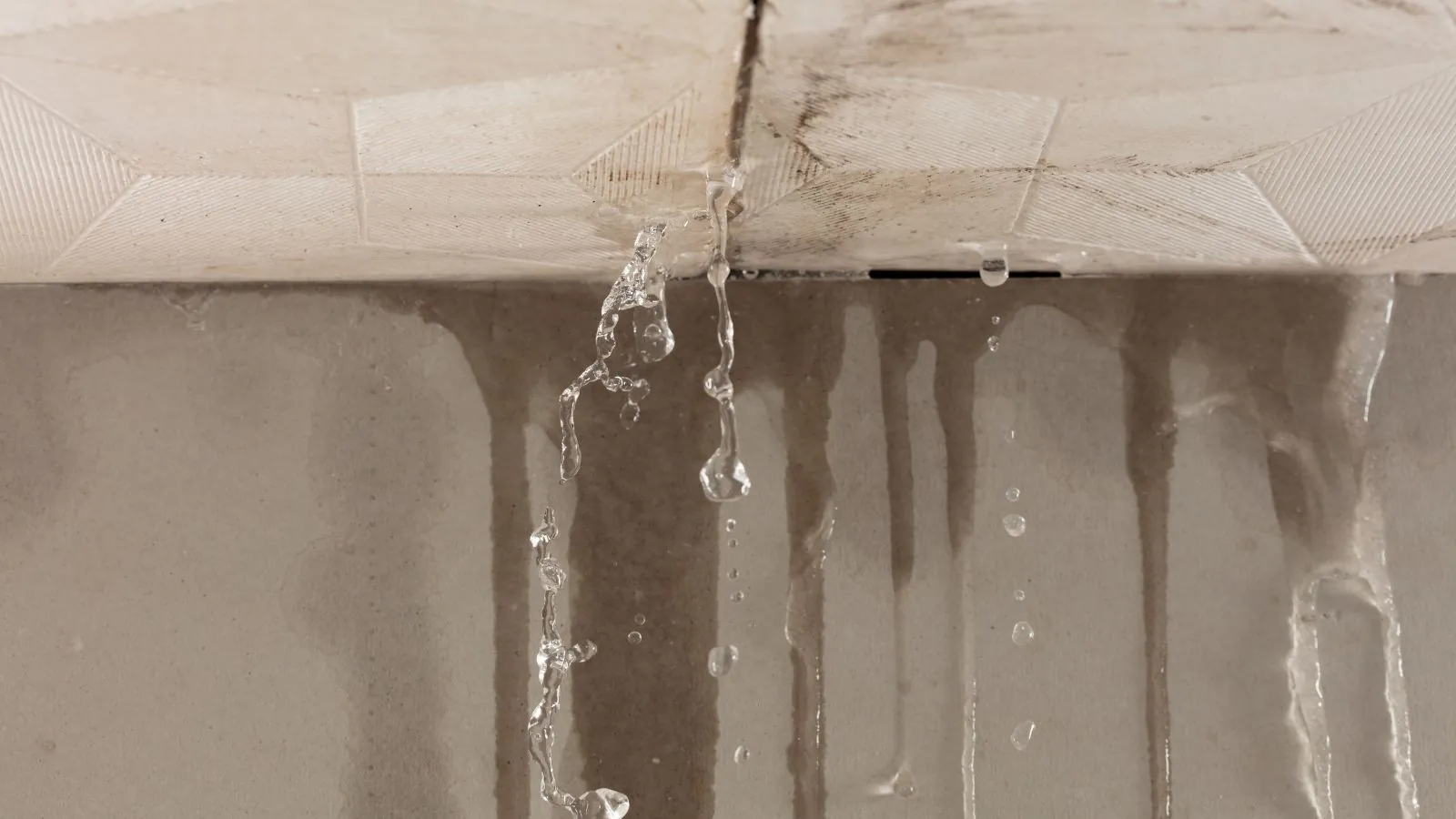
Winter: freezing pipes
Cold snaps freeze and split pipes in unheated spaces, exterior walls and crawl spaces. A split pipe may not leak until it thaws, which is when water floods the space. Know your main valve, insulate exposed lines and keep a trickle in vulnerable ones. See frozen pipe water damage.
Spring: thaw and heavy rain
Snowmelt and spring rain saturate the ground and raise rivers. Cellars seep, sump pumps run hard and river-adjacent properties watch gauges. Check the sump pump, clear gutters and look for new stains. The basement cleanup page explains what happens when seepage becomes standing water.
Summer: thunderstorms and humidity
Summer storms bring wind-driven rain through roofs and windows. High humidity also makes cellars and crawl spaces damp and encourages odors. Run a dehumidifier in damp lower levels and look at the ceiling after storms. See ceiling water damage repair and storm water damage cleanup.
Fall: coastal storms and leaves
Fall brings tropical remnants and coastal storms. Gutters clogged with leaves cause overflow at the roofline and foundation. Clean them before the season, check flashing and know your flood coverage waiting period. The flood damage cleanup page covers storm surge and river water.
| Season | Common problem | What to check |
|---|---|---|
| Winter | Frozen and split pipes | Insulation, main valve, exposed lines |
| Spring | Seepage and river rise | Sump pump, gutters, stains |
| Summer | Wind-driven rain and humidity | Roof, ceilings, dehumidifier |
| Fall | Coastal storms and clogged gutters | Gutters, flashing, flood coverage |
A winter checklist
- Insulate pipes in crawl spaces, garages and exterior walls.
- Seal gaps where cold air can reach pipes.
- Keep heat on in vacant areas, even at a low setting.
- Know how to shut off the water, and who to call.
- Open cabinet doors on cold nights to let warm air reach pipes under sinks.
If a pipe freezes, shut off the water first, then thaw it slowly. Do not use an open flame. A split pipe may only show when it thaws.
A spring and summer checklist
- Clean gutters and test the sump pump before heavy rain.
- Check window seals, caulk and roof flashing.
- Look in the crawl space and cellar for damp patches or standing water.
- Run a dehumidifier in damp lower levels.
- Check hoses and appliance connections, especially after a long winter.
A fall checklist
Clear leaves from gutters and drains. Disconnect and drain outdoor hoses so a spigot does not freeze. Close seasonal properties properly, with the water shut off at the main and the lines drained. Check your flood coverage before the fall storms, because a new policy has a waiting period.
Check the weatherstripping on doors and windows. Tight openings keep out wind-driven rain.
Vacation and seasonal homes
A house that sits empty for weeks needs a plan. Ask someone to visit after storms and cold snaps. Shutting the main valve while you are away limits the damage from a failed line. Some smart devices monitor for leaks and freezing and send alerts. They help only if someone acts on them.
Shoulder seasons surprise people
Late fall and early spring bring freeze and thaw swings. A pipe can freeze overnight and thaw by noon, which makes a leak that no one saw coming. Rain on frozen ground runs off instead of soaking in, and it ends up at the foundation.
Check exterior faucets, hose bibs and unheated spaces during these swings, not just in the middle of winter.
Humidity all year
A coastal town keeps humidity high for much of the year. That affects drying times, closet odors and how fast growth can start on wet material. A dehumidifier in a damp lower level pays for itself in prevention. Check the humidity with a hygrometer and keep it moderate.
What to do first when a season turns
Pick one weekend each season for a short walk-through. Check the cellar, the crawl space, the attic, the gutters and the connections behind appliances. Write down what you found and the date. It takes less than an hour, and it catches many problems while they are small.
Keep a file of photos from each walk-through. If a loss happens later, you can show the condition of the house before it.
Who to call for what
A plumber handles leaking pipes and fixtures. A roofer handles roof leaks. A drainage or waterproofing contractor handles groundwater. The 24/7 line handles the water damage that results, and a dispatcher can tell you which pages apply. Many people call both at once, which is fine, since stopping the source first keeps the drying from starting over.
Keep a seasonal log
A notebook or phone note with the date of each check, what you found and what you fixed becomes a record of the house. It helps a claim, a sale and your own memory. Add the age of the water heater, the roof and the appliances so you know what is due for replacement.
Westerly through the year
The Pawcatuck River forms the western and northern town boundary, and about nine miles of shoreline face the sound and salt ponds. Shore cottages close for the season, which adds winter freeze risk. Westerly Water Department offers seasonal meter removal accounts for properties that close.
Nearby, Hopkinton and Wood River Junction deal with the same spring river rise and private-well questions.
Questions we hear
What is the biggest winter risk?
Frozen pipes in unheated areas.
When do cellars flood most?
After heavy rain and thaw, when the ground is saturated.
Do I need to winterize a seasonal cottage?
Shutting the water off at the main and draining lines are common steps. Ask a plumber.
When is flood insurance needed?
Before the risk, since new policies have a waiting period.