
Know your risk
Ask the Westerly building office about the flood zone for your address and check the FEMA Flood Map Service Center. Know whether your home is in a mapped flood area, a coastal zone or neither. The risk is real in town. The hazard plan places low-lying areas of Watch Hill and Misquamicut Beach in coastal zones.
Check coverage early
Homeowners policies usually exclude flood. The Rhode Island Division of Insurance says flood coverage is a separate policy, and a new policy generally has a waiting period of about 30 days. That means buying flood coverage after a storm warning is too late. Ask about wind and hurricane deductibles too.
Before the storm checklist
- Locate the main water valve and the electrical panel, and tell everyone in the house.
- Move valuables and stored items off basement and cellar floors.
- Photograph or video every room for your records.
- Clear gutters, downspouts and storm drains near the house.
- Check the sump pump and the backup power, if you have them.
- Save the 24/7 line number in your phone.
During the storm
Stay safe first. Stay out of flooded basements, keep away from downed lines and do not use electrical equipment standing in water. If water enters, close the main valve where relevant and photograph the damage. Tarp or board an opening only when it is safe, and keep receipts.
After the storm
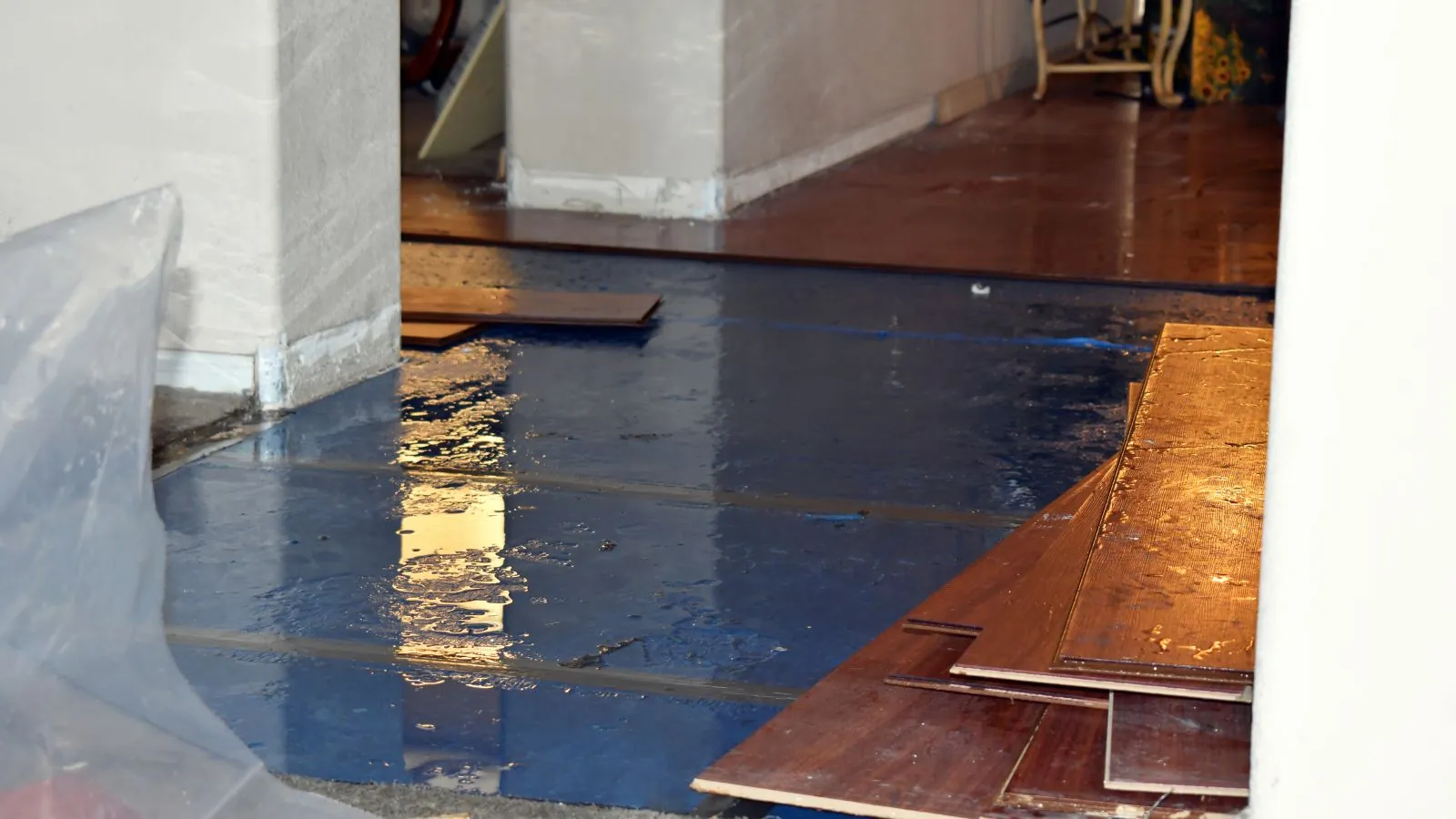
Call the insurer and call the 24/7 line. Flood water and sewage are treated as contaminated, and the flood damage cleanup page explains the work. Wind-driven rain is covered by storm water damage cleanup, and a wet cellar by basement cleanup.
Prepare your records
Make a folder, physical or digital, with your insurance policies, the agent's number, a list of belongings and photos of each room. Store a copy somewhere other than the house. Add the numbers you may need in a storm: the 24/7 line, your insurer, a plumber and an electrician.
Take a photo of your main valve and your electrical panel with labels, so anyone in the house can find them.
Outside the house
- Clean gutters and extend downspouts away from the foundation.
- Check roof flashing, vents and chimney caps for gaps.
- Bring in or secure outdoor furniture, grills and loose items.
- Trim limbs that can fall on the roof or lines.
- Check that grading slopes away from the house.
Small repairs now usually cost far less than the damage they prevent. A roofer can check flashing and shingles, and a landscaper can adjust grading around a wet cellar.
Power, pumps and valves
If you have a sump pump, test it and consider a backup. If you have a generator, run it outdoors, away from windows and doors, never inside a garage or cellar. Keep fuel stored safely. Know how to shut off the gas, water and power, and do not turn power back on in a flooded space until it has been checked.
If you have a private well, know where the pump breaker is. If flood water may reach the wellhead, turn the pump off.
If the power goes out
Never use a generator indoors. Keep flashlights and batteries handy and avoid candles near anything that burns. Turn off major appliances you do not need, and leave one light on so you know when power returns. If the cellar floods, stay out and keep the power off in that area.
If you rely on a well pump, you will not have water when the power is out. Store drinking water ahead of time.
After floodwater recedes
Flood water leaves silt and bacteria behind. Wear boots and gloves, and avoid skin contact. Take photos before you move anything. Do not turn on electrical equipment that was under water until it has been checked. Call the 24/7 line early so drying starts before materials start to break down.
Neighbors and plans
Talk to neighbors about who has a generator, who has a truck and who needs help. Older residents and anyone with medical equipment may need a plan for outages. Know your evacuation route and where to go if you are told to leave. Keep a go-bag with documents, medications and chargers.
A last look before the forecast arrives
Walk the house with a checklist two days before a storm. Confirm the flashlight batteries, charge phones and power banks, fill the car with fuel, and move cars out of low spots. Check that the sump discharge is clear and that gutters are not full of leaves.
Text your household the plan, including the shut-off locations and the number for the 24/7 line. A short message beats a search when the weather turns.
Westerly storm history
Hurricanes in 1938, 1944 and 1954 destroyed beach homes and hotels in Misquamicut, and Superstorm Sandy in October 2012 swept buildings off foundations and drifted sand into roads. In March 2010 the Pawcatuck at Westerly reached a record 15.38 feet.
Neighbors in Hopkinton and Wood River Junction saw river flooding in 2010 too. Private-well owners should plan for bottled water if flood water reaches the well.
Questions we hear
When should I buy flood insurance?
Well before a storm. New flood policies usually have a waiting period of about 30 days.
What should I photograph?
Every room and the outside, before the storm, for your records.
Is a sump pump enough?
It helps with groundwater but fails in power outages. Ask a plumber about backup options.
Who do I call after the storm?
Your insurer and the 24/7 line.