
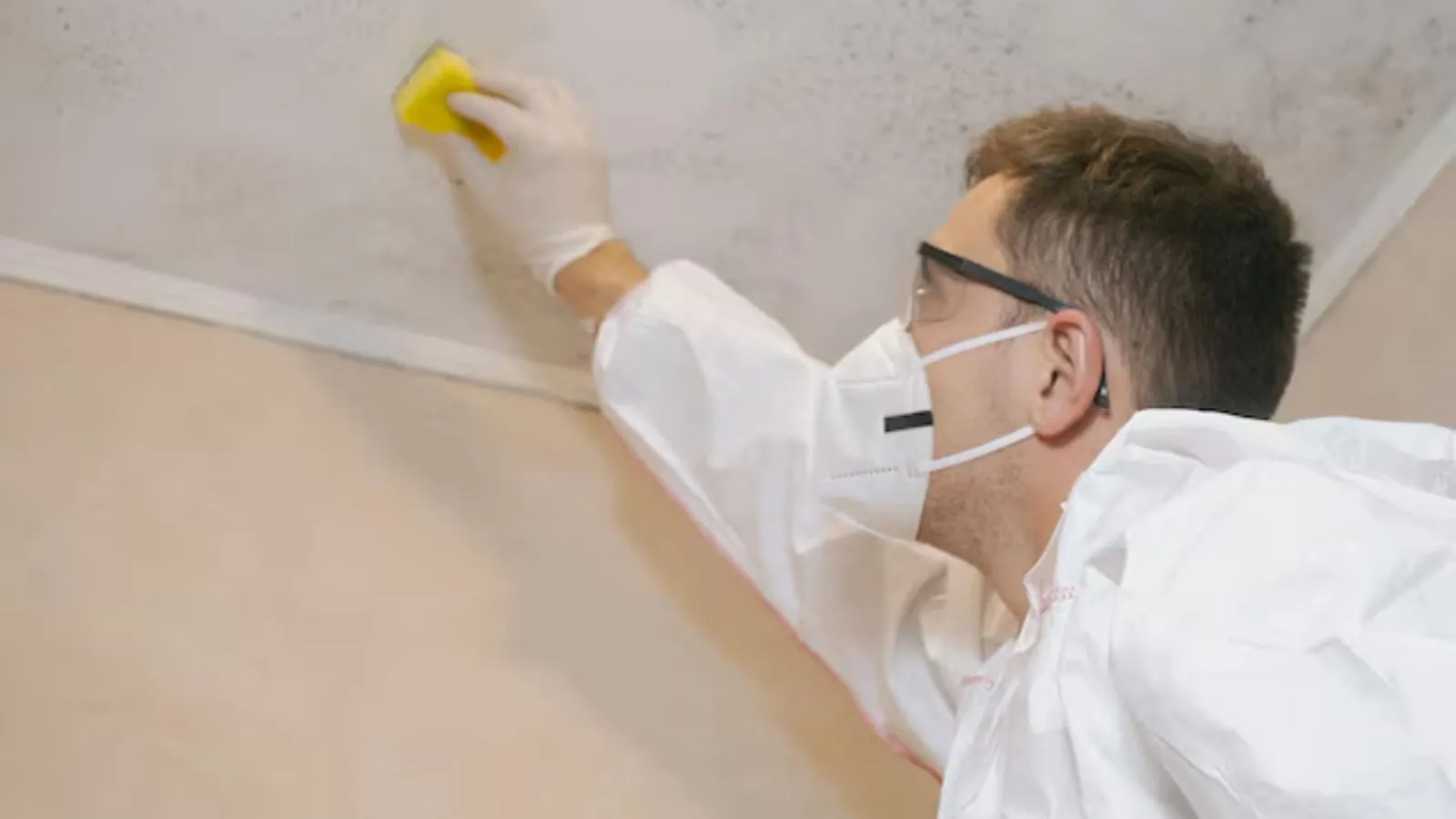
Surface growth versus deep growth
Wood is porous. Growth on a sealed or finished surface may sit on top and wipe off. Growth on bare or rough wood sends roots into the grain, and surface cleaning will not reach it. Soft or crumbling wood means the damage goes beyond mold, because rot has set in and the piece may need replacement.
Fix the moisture first
Nothing holds until the moisture source is fixed. A leaking pipe, a roof leak, a damp crawl space or condensation feeds growth. Wood needs to dry to normal moisture content, and a moisture meter tells you where it stands. The structural drying page explains how drying is verified.
Safe steps for a small patch
- Wear gloves, eye protection and a well-fitting respirator mask.
- Keep the area closed off and avoid dry brushing, which sends spores into the air.
- Wipe the surface with detergent and water, and change cloths often.
- Dry the wood completely with fans and a dehumidifier.
- Bag the cloths and wash your hands.
- Check the wood again in a few days for returning growth.
This is for a small area on solid, sound wood. Large areas, growth inside walls or growth after a flood call for professional removal, which is explained on the mold remediation page.
Why spraying is not the answer
Spraying a product on wet wood can add moisture and leave the root growth. Stains may remain even after the growth is gone, and sanding off the surface of finished wood can spread spores. Bleach on porous wood tends to stay at the surface while the water soaks in. Removal and drying, not a spray, are what hold.
When wood needs replacing
Replace wood that is soft, crumbly or structurally affected. Framing that is only stained and sound can often be cleaned and dried by a crew, sometimes with the surface removed in a controlled way. A structural question belongs to a contractor. The wall and drywall page covers the rebuild.
This page makes no health claims. If you have concerns, talk to your doctor.
Different kinds of wood, different problems
Framing lumber in a cellar or crawl space is rough and absorbent, so growth penetrates. Finished trim and furniture have a sealed surface, so growth often sits on top. Plywood and engineered panels have glue layers that can delaminate when wet, so they are harder to save than solid boards.
Hardwood floors, decks and fences have their own issues. Outdoor wood that grows a green or black film is often weathering plus algae, and a stiff brush and detergent can clean it. Indoor wood with a musty smell and soft spots is a different matter.
Moisture content tells the story
A pin meter reads moisture in wood. Wood in a heated house is usually fairly dry, so a reading well above a dry reference piece of the same wood means it is still holding water and growth can continue. The reference piece gives you a number to compare against.
What not to do
- Do not paint or seal over damp wood, because it traps moisture.
- Do not use a power sander without containment and a respirator.
- Do not mix cleaning products, since some combinations release harmful fumes.
- Do not ignore the source of the water.
If you are unsure about a structural piece such as a joist, a beam or a sill plate, have a contractor look at it before deciding. Wood that is stained but firm is very different from wood that is soft.
Outdoor wood and decks
Decks, fences and siding in a damp climate pick up green or black films. These are often algae and surface growth, and a stiff brush with a mild detergent and water usually cleans them. Let the wood dry fully in the sun before sealing.
Wood that stays shaded and wet will keep growing film. Trim plants, improve airflow and keep gutters clear. If boards are soft, the problem is rot, not film, and the boards need replacing.
Prevention in cellars and crawl spaces
Keep stored wood and cardboard off the floor and away from exterior walls. Use a dehumidifier in damp cellars and check that the drain is clear. A vapor barrier over a dirt floor and sealed foundation vents can reduce moisture in a crawl space. A contractor can advise what fits your building.
A word on stains
A dark stain does not always mean live growth. Wood can stay stained after growth is cleaned, and the stain may be cosmetic. Sanding or bleaching can brighten it, but only after the wood is dry and the moisture problem is fixed. If the stain keeps coming back, the wood is still getting wet.
Wood in a damp coastal climate
Westerly wood sees salt air, humid summers and the occasional flood. The town hazard plan lists areas of the Pawcatuck floodplain and coastal flood zones, and wood framing that sat wet after a storm is a common source of growth. See flood damage cleanup for the first response.
Crawl spaces and cellars hold humidity too. The crawl space page covers it. The Hopkinton and Wood River Junction pages cover private-well homes where a damp lower level is common.
Questions we hear
Does vinegar or bleach kill mold on wood?
Surface products do not reach roots in porous wood, and a wet product adds moisture. Removal and drying are what work.
Can I sand mold off wood?
Sanding can spread spores. Do not sand growth without containment and protection.
How do I know if the wood is dry?
A moisture meter. Compare it to a dry piece of the same wood.
When should I call a crew?
For large areas, growth in walls, growth after a flood or wood that is soft.