
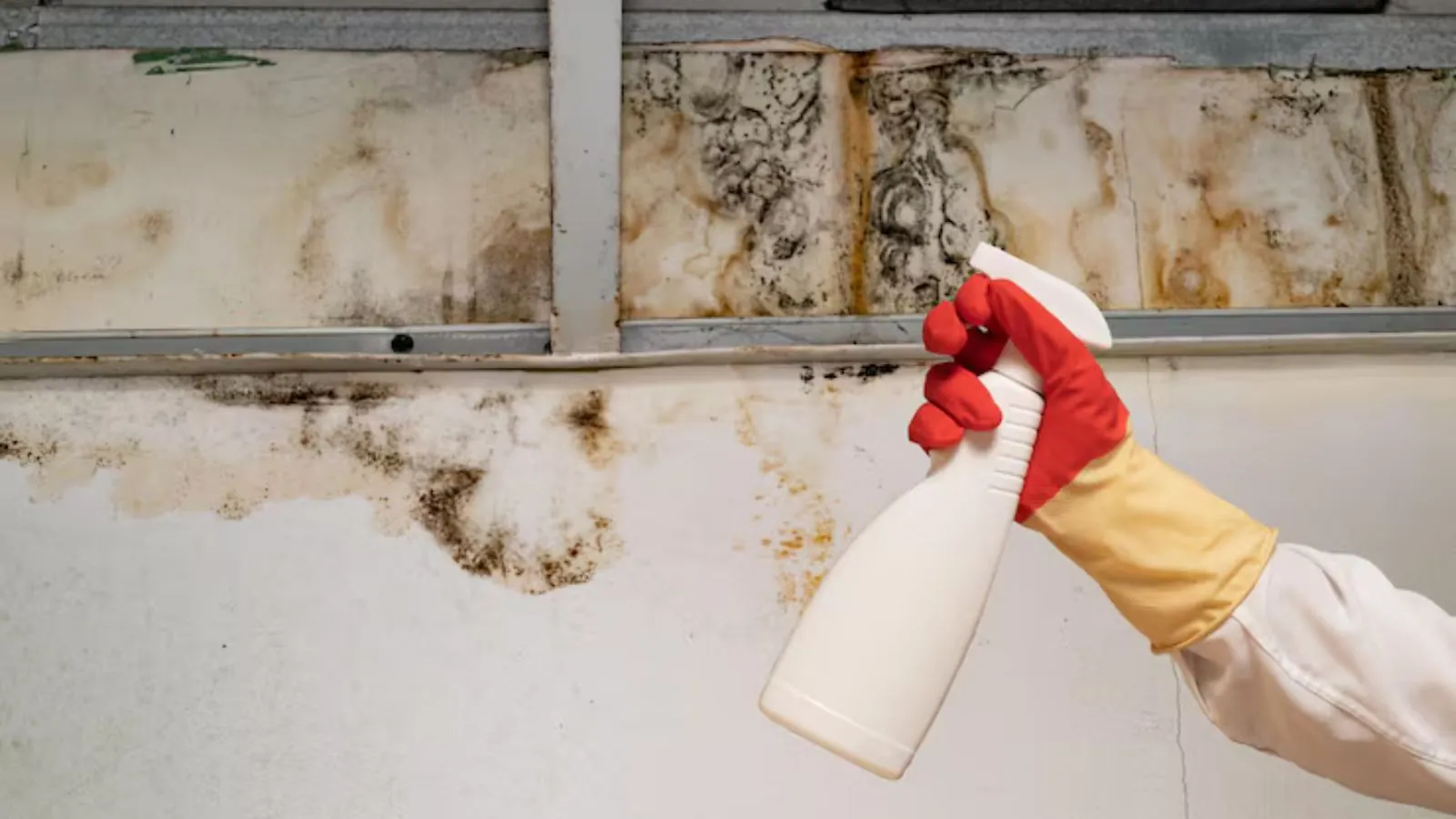
Step one is water, not mold
Find the moisture source and fix it. A pipe, a roof, a window, groundwater or condensation can be responsible. Without that, cleaning is temporary. Then dry the area. Dry means moisture readings back to normal, not just a surface that feels dry.
Step two: decide the size of the problem
Small patches on hard surfaces can often be cleaned by an owner. Growth on drywall, insulation, carpet or inside walls usually calls for removal. Large areas, repeated growth and any growth after a flood or sewage loss call for a crew. When unsure, a moisture mapping visit shows how far the water went.
Step three: contain and protect
Close doors, turn off forced air that would carry spores and wear gloves, eye protection and a respirator mask. Do not dry brush or stir up the area. Crews build plastic barriers and run filtered air machines to hold spores in the work zone.
Step four: remove and clean
- Porous materials with growth, such as drywall, insulation and carpet, are removed and bagged.
- Hard surfaces and framing are wiped or vacuumed with a HEPA vacuum.
- Areas are cleaned and allowed to dry.
- Debris leaves in sealed bags.
Step five: dry and verify
The structure is dried with air movers and dehumidifiers, and readings show when it is done. The structural drying page explains that stage. Follow with repairs. If growth keeps returning, the moisture source is still active.
What a crew adds
A crew brings containment, filtered air, the right removal scope and drying equipment, and works to the S520 guidance. The mold remediation page explains the process. This page makes no health claims. If you have concerns, talk to your doctor.
Mold that follows a covered water loss may be part of a claim, and many policies limit mold otherwise. Check your policy or ask your insurer.
Hard surfaces versus porous ones
Non-porous surfaces such as tile, glass and sealed counters can usually be cleaned with detergent and water, then dried. Porous materials absorb growth into their structure. Drywall, ceiling tile, insulation, carpet and pad cannot be cleaned reliably, so they are usually removed.
Wood is in between. Solid wood can often be cleaned and dried, while heavily affected or soft wood is replaced. The goal is to take out what cannot be made clean and to dry what can.
Common reasons growth returns
- A leak that was patched on the surface but not fixed
- A cellar or crawl space that stays humid
- Wet insulation or pad that was left in place
- Condensation on cold surfaces such as exterior walls and windows
- A dryer, bath fan or kitchen hood that vents into the house
Each of these is a moisture problem. Ventilation, drainage, insulation and repairs all matter. A crew can remove the growth, but the building has to stay dry afterward for it to stay clean.
Keeping a record
Photograph the area before and after, and keep the scope and the readings. If you ever sell, a clear record helps show what happened and how it was handled.
Do it yourself or call a crew
| Situation | Likely approach |
|---|---|
| Small patch on tile or a sealed hard surface | Clean with detergent and water, then dry |
| Growth on drywall, ceiling tile or carpet | Removal of the material, usually by a crew |
| Growth inside a wall or behind cabinets | Inspection and a contained removal |
| Growth after sewage or river flood water | Crew with protective gear and containment |
| Growth that returns after cleaning | Find the moisture source first |
What not to buy
Be wary of products that promise a quick fix on porous material. A coating over damp drywall hides the problem and traps moisture. A fog machine without removal does not fix a wet wall. Spend the money on finding the leak and on drying instead.
A note on cleaning products
Many household products can irritate skin and eyes, and some give off harmful fumes when mixed. Read labels, wear gloves and eye protection, ventilate the space and never mix products. Detergent and water do the job for small areas on hard surfaces. Keep it simple and dry the area thoroughly afterward.
A simple prevention routine
Check under sinks, around windows and in the cellar every season. Run bath fans during and after showers. Fix drips quickly. Keep furniture a few inches from exterior walls so air can move. These small habits cut the chance that a damp spot turns into a bigger problem, and they cost almost nothing.
Westerly humidity and water history
Westerly sits on the coast with a river on two sides, and the town hazard plan counts about a third of the tax base in special flood hazard areas. After a storm or river rise, wet materials that are not dried quickly are where growth starts.
If your property flooded, the flood damage cleanup page explains the first response. For nearby towns, see Hopkinton and Wood River Junction.
Questions we hear
How long does mold take to appear after water?
It can start when materials stay wet for a day or two. Drying quickly lowers the chance.
Can I remove mold myself?
Small patches on hard surfaces, yes. Growth in walls, on drywall or after a flood needs a crew.
Will mold come back?
It can if moisture remains. Fix the source and dry the structure.
Does a dehumidifier get rid of mold?
It helps prevent it by lowering humidity. It does not remove existing growth.